 Skip to content

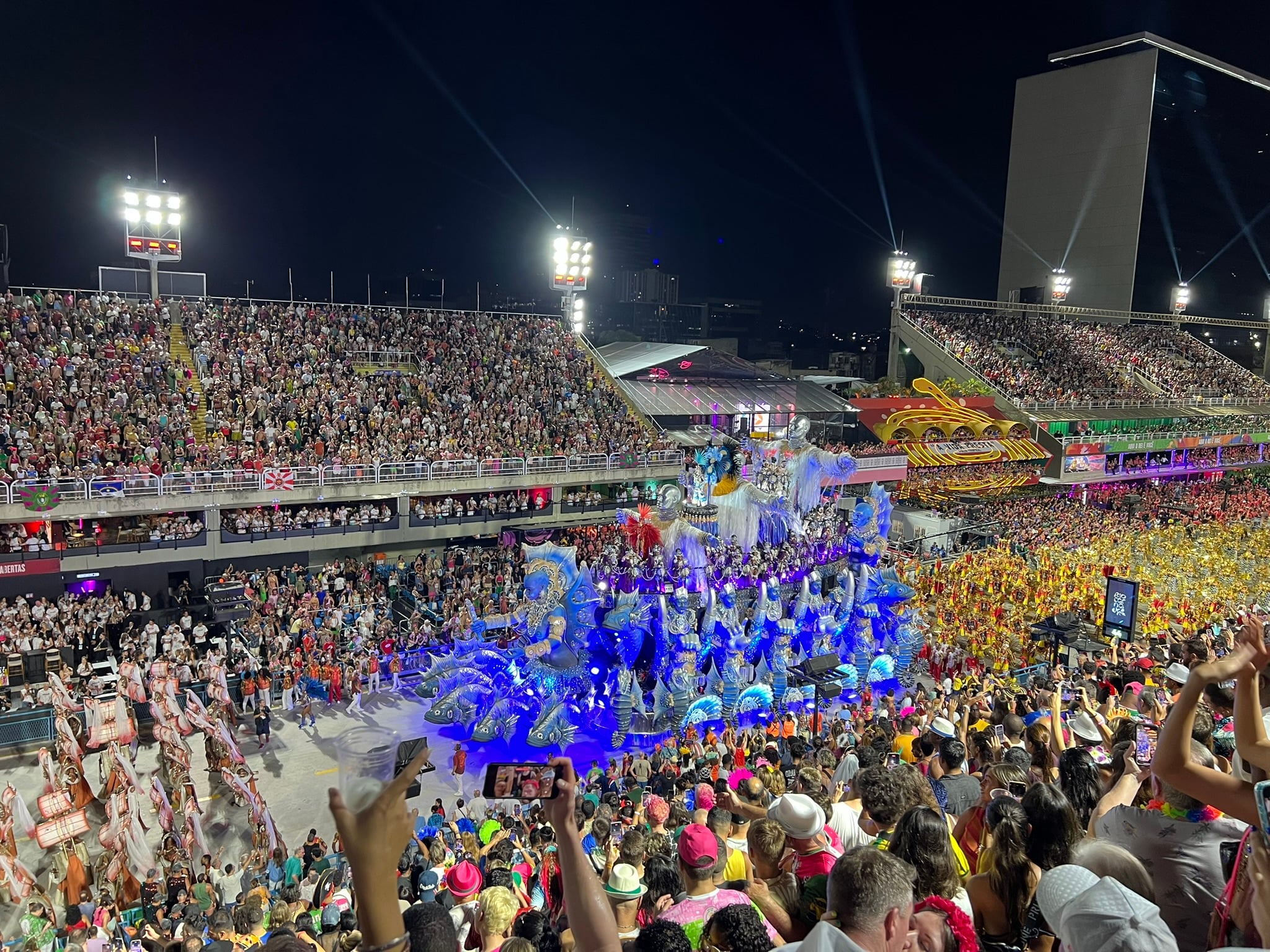
Most people first encounter Rio Carnival as an image: enormous floats, extraordinary costumes, packed grandstands and thousands of people moving through the Sambadrome. But if you want to understand what is really happening, it helps to listen.
Rio Carnival is not simply a parade with samba playing behind it. The main Sambadrome competition brings together samba schools that spend months developing a complete musical and visual presentation around an enredo, or theme. Music, lyrics, percussion, choreography, costumes and floats all serve that story.
For first-time visitors, knowing even a little about that structure changes the experience completely. Here is what to know if you are planning for Rio Carnival 2027.
When is Rio Carnival 2027?
The headline Special Group samba school parades at the Sambadrome take place on Sunday, February 7, Monday, February 8, and Tuesday, February 9, 2027. Four samba schools are scheduled to perform each night.
The top six schools return for the Champions’ Parade on Saturday, February 13, 2027. The Série Ouro parades, the division immediately below the Special Group, take place on February 5 and 6.
That calendar is useful when deciding how long to stay in Rio, especially because Carnival is much larger than the Sambadrome. Street blocos, rehearsals, concerts and neighborhood celebrations create a very different side of the experience.
What exactly is a samba school?
The word “school” can be misleading for travelers who are new to Carnival. A samba school is a cultural organization rooted in a community, with musicians, composers, dancers, craftspeople, designers and supporters involved in preparing its annual presentation.
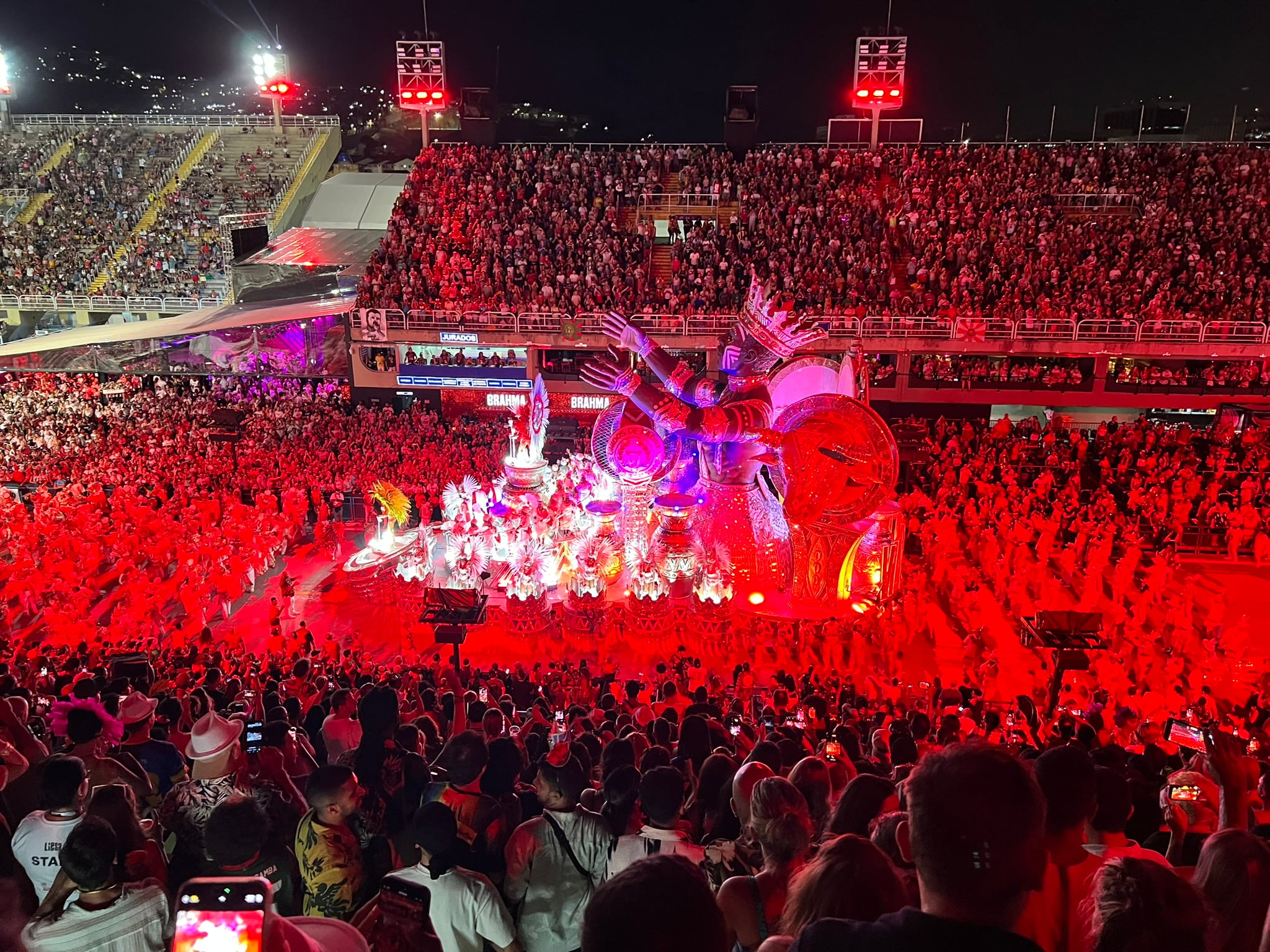
Each school develops an enredo, the theme or narrative that shapes the parade. The samba-enredo, costumes, floats, choreography and visual symbols are built around that central idea. What you see moving through the Sambadrome is therefore not a collection of unrelated spectacles. It is a carefully organized story.
Understanding that makes it easier to follow what each school is trying to communicate rather than simply watching the parade as a sequence of costumes and floats.
Listen to the bateria
For musicians, one of the most remarkable parts of Carnival is the bateria, the percussion section of a samba school.
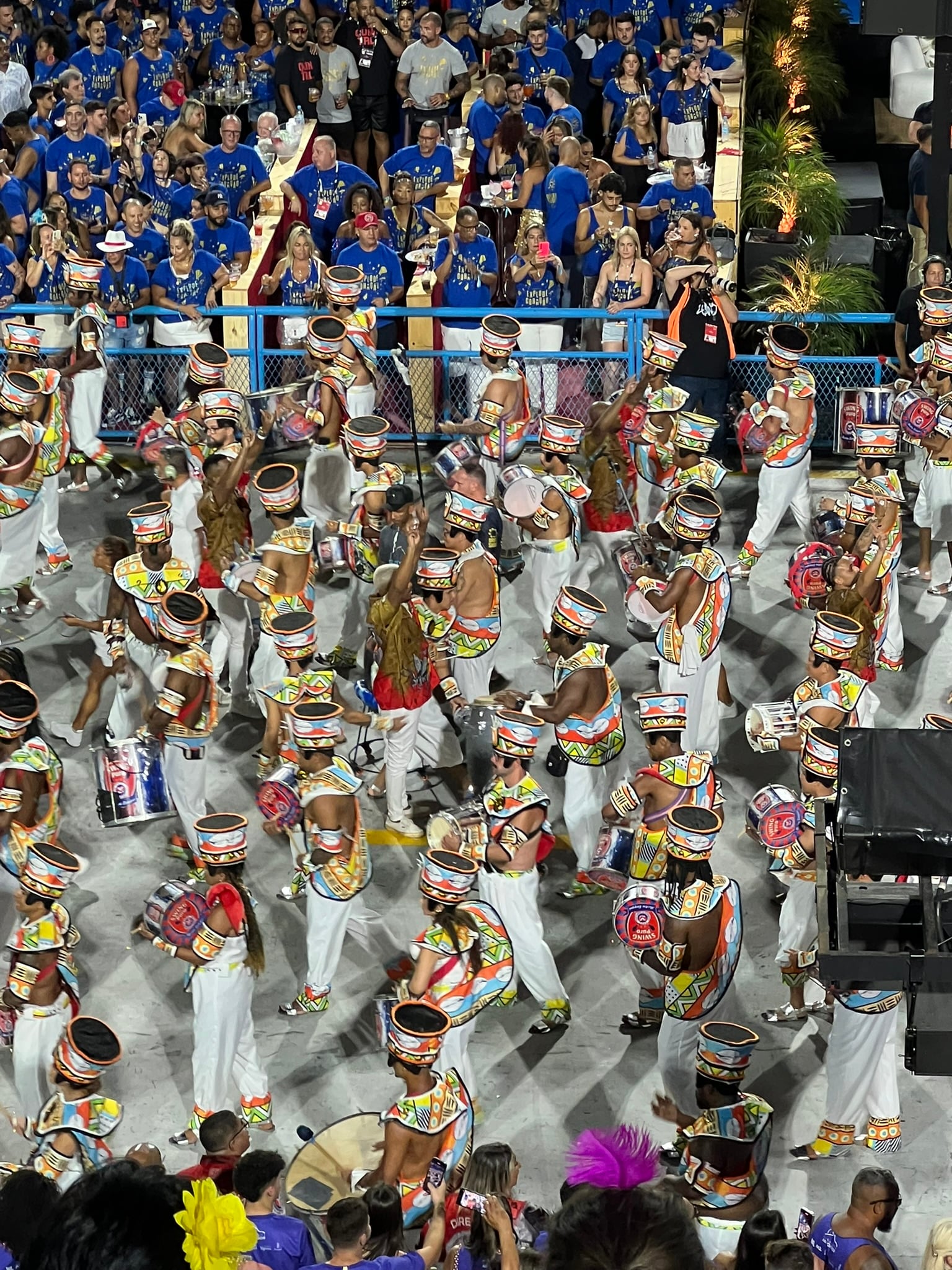
A bateria brings together a large percussion ensemble in which different instruments have distinct rhythmic functions. Surdos establish the deep pulse. Caixas and repiniques add their own layers and articulations. Tamborins cut through with tightly organized patterns, while other instruments add color, accents and movement.
The impact is enormous, but the music is not random noise. Entrances, breaks, changes and transitions are rehearsed. Once you start listening to those relationships, the parade becomes much more than a visual event.
If Brazilian music is part of the reason you are traveling, our guide to Brazilian music genres is a useful introduction to samba and several of the traditions you may encounter elsewhere in Brazil.
How does the Sambadrome work?
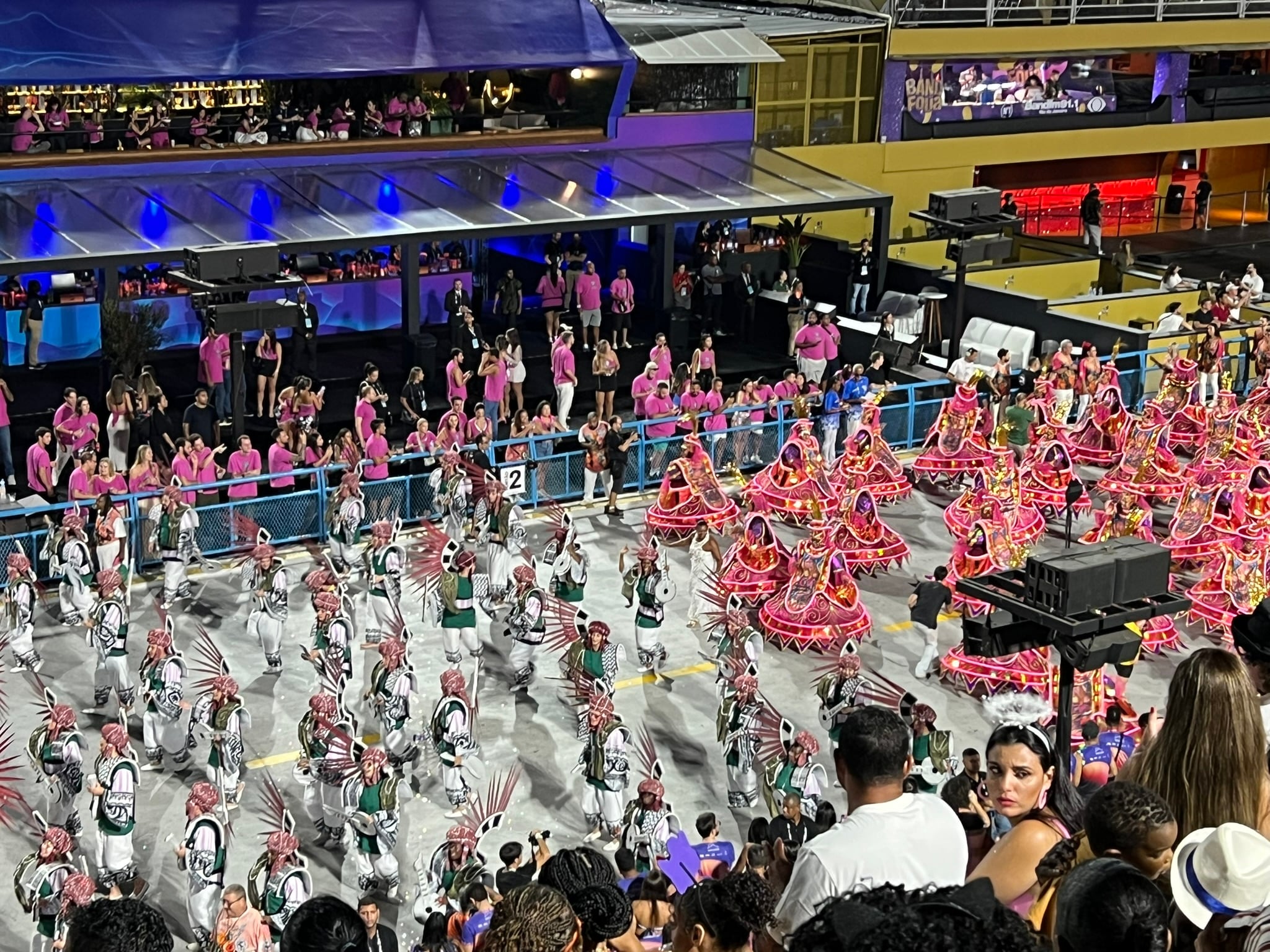
The Sambadrome Marquês de Sapucaí is Rio Carnival’s purpose-built parade venue. Instead of a conventional stadium with performers gathered in the center, it is organized around a long parade avenue. Samba schools move through that avenue while spectators watch from different sectors on both sides.
There are several kinds of seating. Grandstands, or arquibancadas, offer elevated views and the collective atmosphere many people associate with Carnival. Front boxes, or frisas, put spectators much closer to parade level. There are also numbered chairs in specific sectors, as well as premium hospitality and camarote options.
There is no single best choice for every traveler. Someone who wants to see the full formation of a school may value a different view from someone who wants to be close enough to study costumes, instruments and individual performers.
The Sambadrome is only one side of Carnival
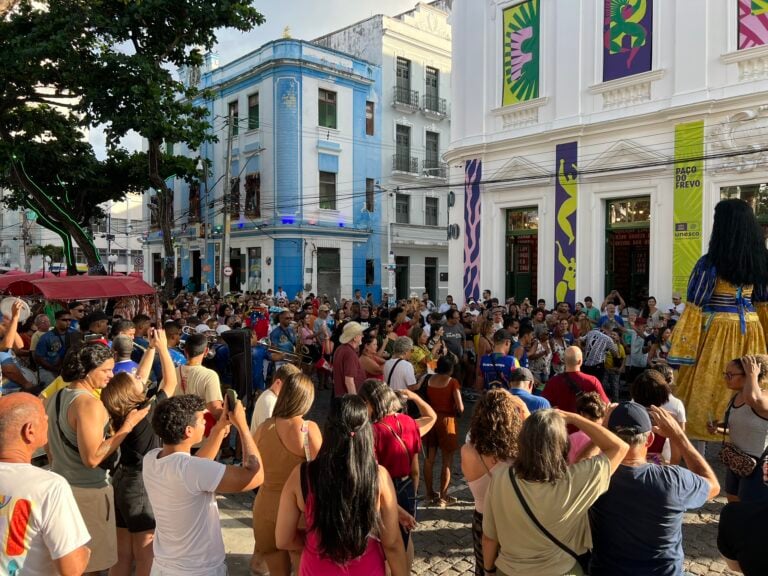
Rio Carnival also happens in the streets. Blocos range from very large public celebrations to smaller neighborhood gatherings, and they can feel completely different from the formal competition at the Sambadrome.
At the Sambadrome, you are watching samba schools present highly rehearsed work inside a competition. At a bloco, the boundary between performer and audience is much looser. Music moves through the street and people move with it.
Experiencing both helps explain why Carnival cannot really be reduced to one parade ticket.
What is the Champions’ Parade?
After the competition has been judged, the six highest-ranking samba schools return to the Sambadrome for the Champions’ Parade. In 2027, it is scheduled for Saturday, February 13.
For travelers with flexible dates, this creates another way to experience top-performing schools in the Sambadrome. It is also one reason to think carefully about whether your Rio stay should end immediately after the competitive parade nights or continue into the following weekend.
Rio Carnival is also Afro-Brazilian history
It is difficult to understand samba without understanding Rio’s Afro-Brazilian history.
Areas around Pedra do Sal and Pequena África, or Little Africa, are particularly important to that story. Rio’s musical history developed through Black communities shaped by migration, African diasporic traditions, religion, labor, neighborhood life and social change.
That history deserves more than a quick stop between famous landmarks. Connecting the spectacle of the Sambadrome with the neighborhoods and communities from which Rio’s samba traditions developed makes the experience considerably richer.
For more context, you can also read our earlier field notes from Rio Carnival and our article on Rio and Afro-Brazilian cultural travel.
Should you visit Rio Carnival independently or with a tour?
You can absolutely attend Rio Carnival independently. Travelers can book a hotel, buy Sambadrome tickets and research street events on their own.
The harder part is usually not buying the ticket. It is understanding the experience and navigating the logistics around it. Which parade night makes sense? What are the schools presenting? What should you listen for in the bateria? How do the blocos differ? How do you move around Rio when the city’s normal traffic and routines change during its largest annual celebration?
Those questions matter even more for travelers who want more than a photograph from the Sambadrome.
At Musical Getaways, we approach Carnival through music, cultural context and a very small-group format. Our Rio Carnival Tour 2027 combines the Sambadrome with experiences that help travelers understand Rio beyond the parade itself.
Carnival is extraordinary to look at. It becomes even more interesting when you understand what you are hearing.
Rio Carnival 2027 FAQ
When are the main Rio Carnival 2027 parades?
The Special Group parades are scheduled for February 7, 8 and 9, 2027. The Champions’ Parade is scheduled for February 13.
What is a samba school?
A samba school is a community-based cultural organization that prepares a complete Carnival presentation around a theme, including music, percussion, dance, costumes and floats.
What is the difference between a bloco and the Sambadrome?
The Sambadrome hosts the formal samba school competitions. Blocos are street Carnival celebrations that vary enormously in size, musical style and atmosphere.
Is the Champions’ Parade worth considering?
It can be, especially if you want another opportunity to see the highest-ranking schools perform. Whether it makes sense depends on your dates, budget and how much Carnival you want to experience.
Watch: Rio Carnival with Musical Getaways
A look at the music, scale and atmosphere of Rio Carnival through our Musical Getaways experience.