 Skip to content
Rio de Janeiro is an obvious starting point for music travel in Brazil. Samba schools, choro, bossa nova and Carnival have made the city part of the global musical imagination. But stopping there can leave a traveler with a very narrow picture of how Brazil sounds.
Recife and nearby Olinda open a different musical geography. Frevo places brass bands and athletic dance at the center of Carnival. Maracatu brings processional percussion, song, courtly imagery and Afro-Brazilian religious and community histories into the street. Forró, coco, ciranda and the legacy of manguebeat add still more layers.
Recife is not a northern version of Rio
Brazilian music does not radiate outward from one national center. Different regions developed their own musical practices through distinct histories, populations, religious traditions, institutions and forms of urban life.
In Rio, a traveler might spend time with samba school percussion, choro or bossa nova. In Recife and Olinda, the ear shifts toward the piercing sound of frevo brass, the deep pulse of maracatu alfaias, the call of the gonguê and Carnival traditions that belong to Pernambuco.
Recife also produced manguebeat in the 1990s, associated with artists such as Chico Science and Nação Zumbi, connecting regional rhythms with rock, funk, hip-hop and the social reality of the city.
Frevo changes when you hear it in Recife
Frevo is easy to recognize visually. Small umbrellas, fast footwork and bright Carnival colors often become the first image travelers encounter. The music itself deserves more attention.
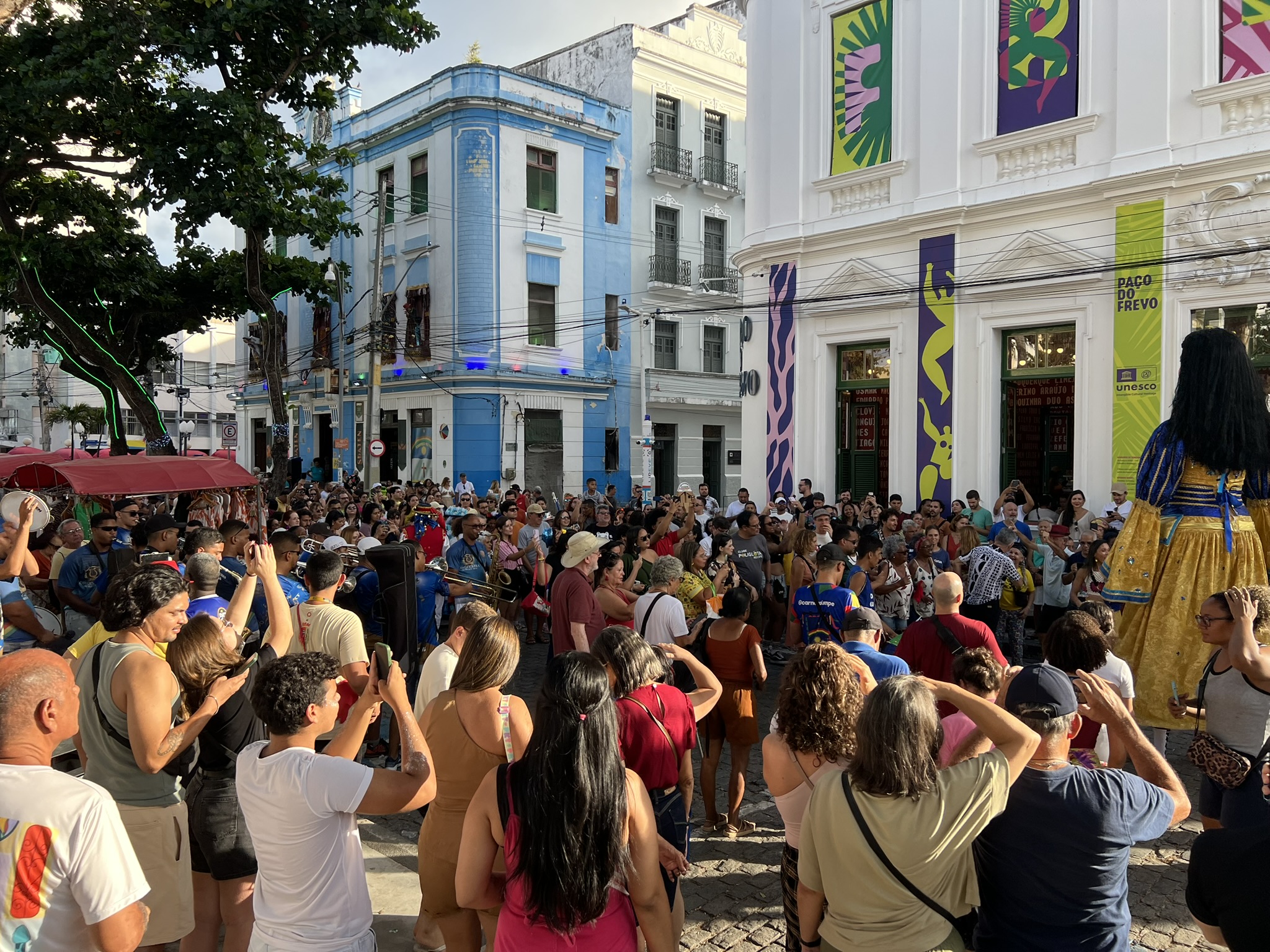
In Recife, Paço do Frevo is a useful place to slow that experience down. The center is dedicated to the preservation, research, teaching and presentation of frevo through music, dance, exhibitions and documentation.
Its fast, vigorous sound developed through fanfares and martial bands, drawing from marching music, Brazilian tango, polka, quadrille and classical repertoire. The accompanying dance, the passo, is closely connected with agility, improvisation and the history of capoeira.
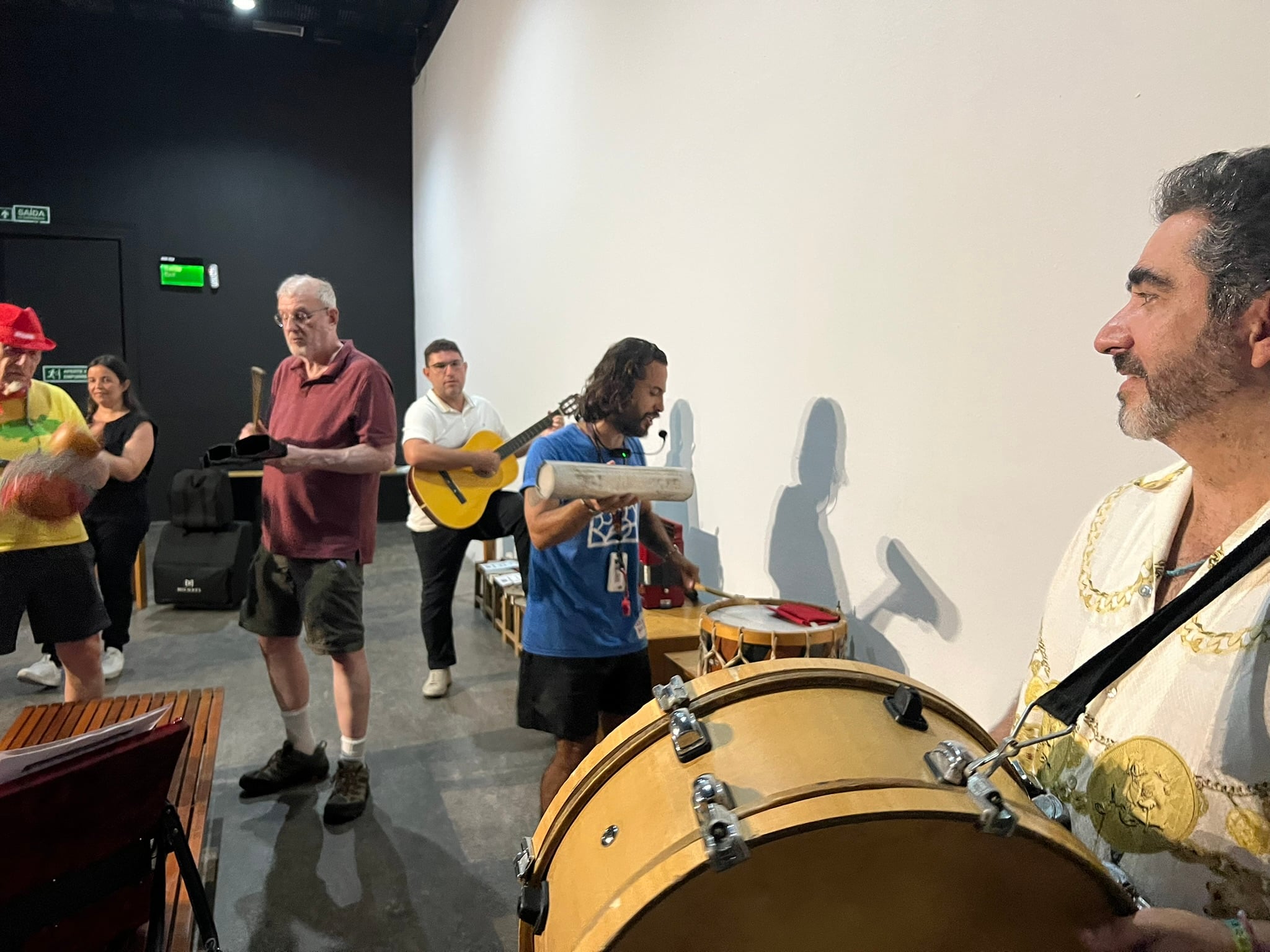
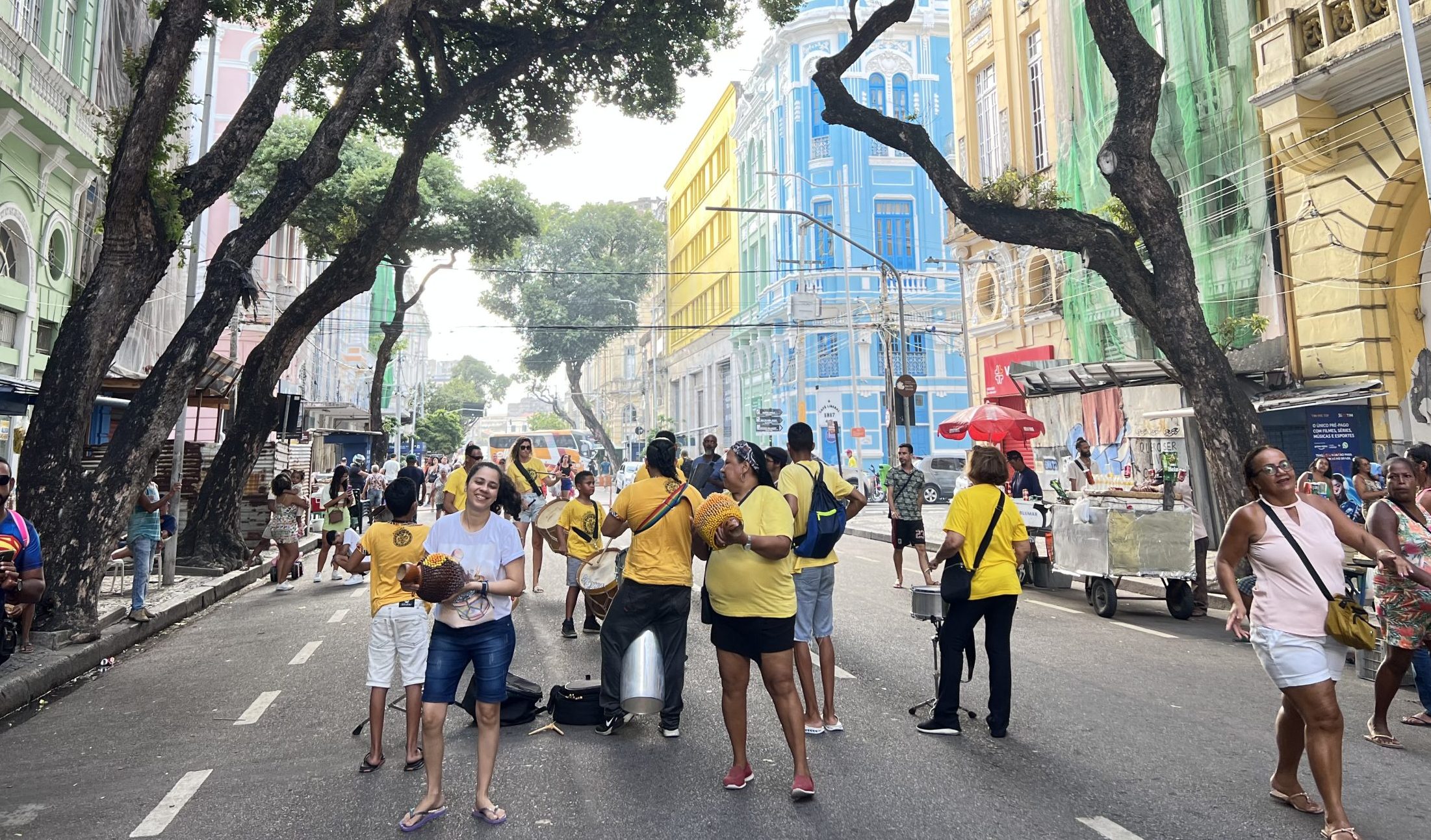
A good way to hear frevo is to compare settings. A polished stage performance reveals arrangement and ensemble precision. A street setting makes movement, crowd response and physical space impossible to separate from the sound. A workshop slows the experience down enough to notice how melody and motion interact.
Maracatu is not one thing
“Maracatu” is sometimes presented to travelers as if it were a single percussion style. That shortcut hides important distinctions.
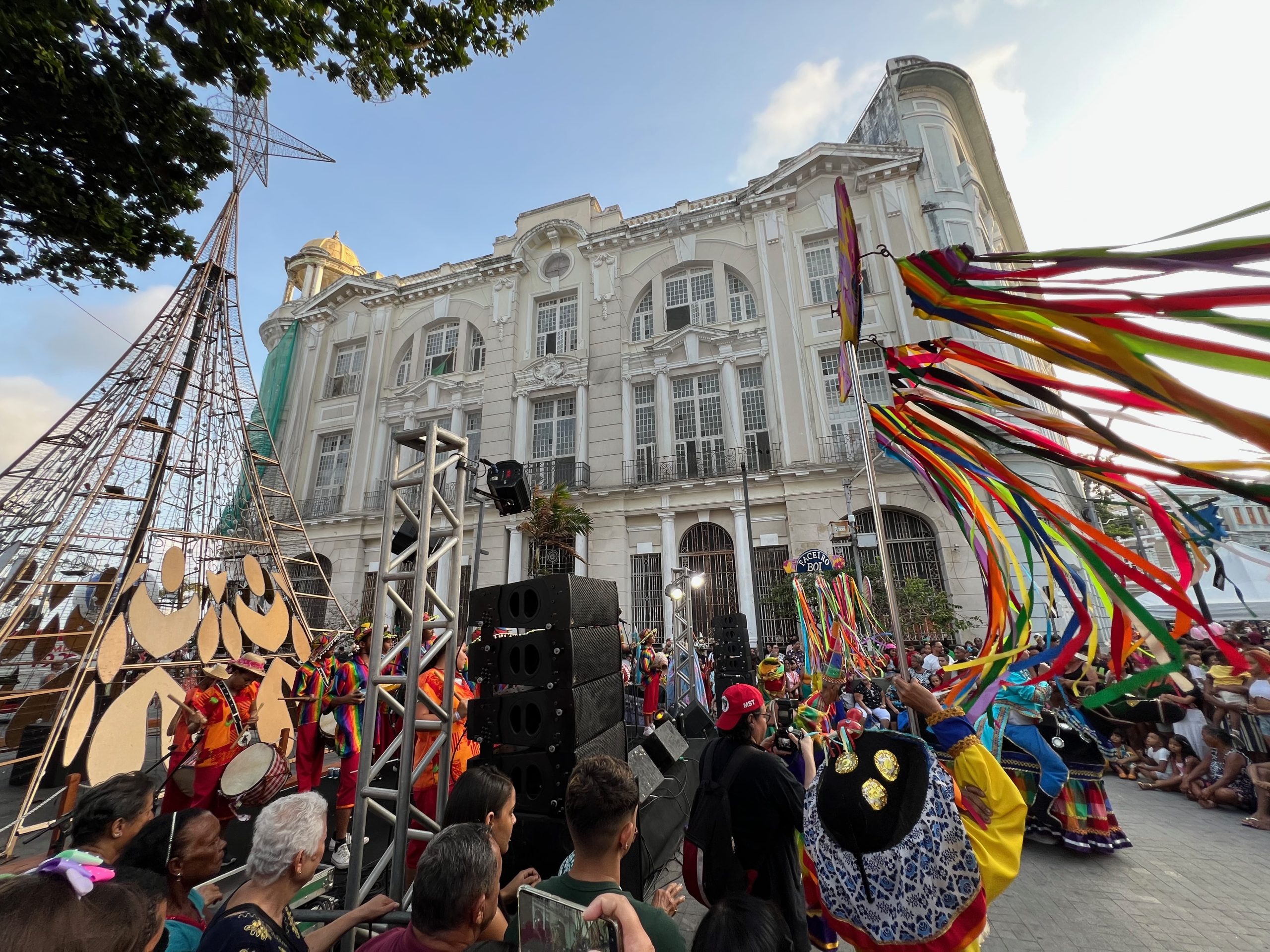
Maracatu nação, strongly associated with Recife and Olinda, includes processional music, percussion, singing, royal court imagery and relationships with Afro-Brazilian religious traditions. Its sound is built around large alfaias, caixas, gonguê and other percussion, with separate rhythmic parts locking into a collective groove.
Maracatu rural, also known as maracatu de baque solto, is connected more strongly with Pernambuco’s Zona da Mata and follows a different musical, visual and social logic. A music-led trip should make those differences visible rather than flatten them into one Carnival label.
Olinda gives the music a different physical setting
Recife and Olinda sit next to each other, but they do not feel interchangeable. Olinda’s historic center climbs across hills above the Atlantic, with churches, convents, gardens, houses and narrow streets shaping the way people move through the city.
During Carnival, those streets become part of the musical experience. Blocos move through tight spaces. Brass instruments project around corners and up hills. Crowds compress and expand according to the street itself.
The architecture does not create the music, but it changes how a traveler encounters it. The same frevo arrangement heard on a formal stage and in a steep colonial street can register very differently because distance, movement, bodies and acoustics change the listening experience.
What to listen for in Recife and Olinda
In frevo, notice the speed and articulation of the brass, the way melodic lines push dancers forward and the conversation between music and the passo.
In maracatu nação, listen past the overall volume. Try to separate the low alfaias from the higher percussion and metallic gonguê. The groove becomes more interesting when you can hear several parts occupying different rhythmic roles.
In forró, pay attention to how accordion, zabumba and triangle create a completely different sense of weight and movement. And when contemporary bands bring rock, electronic music, rap or funk into conversation with Pernambuco traditions, listen for what they keep and what they change.
A workshop can be more valuable than another show
One of the easiest mistakes in music travel is to schedule performance after performance without giving the traveler a way to process what they are hearing.
A small percussion or rhythm workshop can make a maracatu performance easier to follow later. Time with a musician can clarify how frevo arrangements are built. A visit to a cultural institution can provide history that is difficult to absorb in the middle of a loud evening program.
How Recife and Olinda fit with Rio and Salvador
For a first music-focused trip to Brazil, Rio, Salvador and Recife–Olinda work well together because they do not tell the same story.
Rio offers a route into choro, urban samba, bossa nova and rehearsal culture. Salvador brings Afro-Bahian histories, Candomblé, samba de roda, blocos afro and other traditions into sharper focus. Recife and Olinda introduce Pernambuco through frevo, maracatu, forró, coco, ciranda and contemporary movements such as manguebeat.
That difference is why we include Recife and Olinda whenever a traveler tells us they want to understand Brazil through music rather than simply see the most famous landmarks.
Go beyond the familiar version of Brazil
Recife and Olinda reward travelers who arrive ready to listen closely. Frevo makes more sense there. Maracatu becomes more specific there. The streets of Olinda show why performance space matters. A workshop can turn a wall of percussion into individual voices.
Read our 10-day Rio, Salvador and Recife itinerary, then explore our Brazil Music & Cultural Tour or bespoke Brazil music journey.
To compare private travel with hosted departures, visit our Brazil music and cultural tours hub. The choice of format matters as much as the route: consider how much time you want in Pernambuco and how you prefer to travel.