 Skip to content
At first, this story looks like a contradiction.
Cuba and Iceland occupy very different places in the musical imagination. Cuba is associated with layered percussion, dance, song, improvisation, Afro-Cuban traditions, and a musical culture that regularly moves into streets, homes, rehearsal rooms, and public life. Iceland is more often associated with spacious arrangements, electronic experimentation, Nordic jazz, contemporary composition, and music shaped by a small but intensely collaborative creative community.
They are two islands separated by geography, climate, language, and history. Yet inside the 2026 Reykjavík Jazz Festival program, Havana appears more than once.
It appears through Icelandic bassist and composer Tómas R. Einarsson, whose relationship with Cuban music has developed across decades of listening, composing, traveling, recording, and working with musicians in Havana. It also appears through vocalist María Magnúsdóttir, whose tribute to the great women singers of Latin America includes one of Cuba’s most recognized voices, Omara Portuondo.
This does not mean that Icelandic jazz is secretly Cuban, or that Reykjavík Jazz Festival should be understood as a Latin music festival. The connection is more interesting than that. It shows what can happen when musicians take another culture seriously enough to study it, travel toward it, and allow it to reshape their own work.
The Route from Reykjavík to Havana Began With Language
Tómas R. Einarsson’s relationship with Cuba did not begin as a festival concept or a record-label strategy. One of the doors was language.
In a Reykjavík City Library program about his interest in Latin America, Tómas explained that learning Spanish opened a path into Cuban music and culture. His engagement extended beyond rhythm and recordings into Cuban literature and poetry, including the work of Cuban poet Herberto Padilla. That matters because musical influence becomes much deeper when a musician begins to understand the language, stories, humor, history, and cultural references around the sound.
There is a difference between borrowing a rhythm because it sounds exciting and developing a long relationship with the culture that produced it. Tómas’s work belongs much closer to the second category.
He had already established himself as a jazz bassist and composer in Iceland, but he was also asking a difficult question about identity. According to a presentation hosted by the Iceland University of the Arts, Tómas reached a point in the early 1990s when he began asking where Iceland existed inside his own music. That question led him toward Icelandic poetry and a more deliberate search for local roots.
Cuban music later changed the question rather than replacing it.
He described becoming increasingly focused on rhythm under the influence of Cuban music, reducing some of the harmonic density associated with modern jazz and reconsidering how a composition could move. Over time, the search for an Icelandic musical identity and the attraction of Latin rhythm began to exist inside the same body of work.
The most interesting music between cultures is rarely created by erasing one identity in favor of another. It happens when a musician learns to carry both.
Kúbanska: A Turning Point for Latin Jazz in Iceland
That developing relationship became especially visible in 2002 with Kúbanska.
According to the Icelandic Music Information Centre, Kúbanska was the first Latin jazz album recorded in Iceland. The album was nominated in two categories at the Icelandic Music Awards, but its importance goes beyond awards. It demonstrated that an Icelandic composer could engage seriously with Cuban and Latin rhythmic language without pretending that Reykjavík and Havana were the same place.
The title itself makes the direction clear, but the music was still being made from an Icelandic position. Tómas was not trying to disappear into an imported identity. He was building a new compositional vocabulary from the point where his own history met the music that had captured his attention.
That is a useful distinction. Cross-cultural music is sometimes discussed as though influences simply float across borders by themselves. In practice, those movements usually depend on individuals who decide to do the work. They listen repeatedly. They learn languages. They travel. They ask questions. They make mistakes. They return. Eventually, the influence becomes less like a costume and more like part of their musical life.
Recording Havana With Cuban Musicians
The relationship became more direct when Tómas traveled to Havana in 2003 and recorded with Cuban musicians.
The resulting album, Havana, was not simply an Icelandic studio project with Cuban imagery attached to it. The recording process placed Tómas inside an actual working relationship with musicians in Cuba. The album later received two Icelandic Music Awards, showing that the project resonated back home as something more substantial than an experiment.
He continued the conversation with Romm Tomm Tomm, recorded in 2006 across Reykjavík and Havana. Sessions took place in Havana’s historic EGREM studios, and the project involved 14 musicians.
The geography of those recordings is significant. Music was not only moving north through records that Tómas heard in Iceland. Musicians, compositions, and recording sessions were moving in both directions. Reykjavík and Havana became active parts of the same creative process.
This is one of the reasons the story feels so relevant to Havana Music Tours and Musical Getaways. Our work in Cuba has always been built around the idea that musical culture is carried by people and relationships, not just by famous songs or recognizable visual symbols. Tómas’s recording history reflects that same principle.
What Happens When Cuban Rhythm Reaches Iceland?
The easy way to describe this music would be to call it a fusion of Cuban heat and Icelandic cool. That sounds appealing, but it reduces both cultures to travel-advertising language.
The real process is more complicated.
Cuban musical traditions contain their own internal histories, regional differences, rhythmic systems, performance practices, and relationships between African and European sources. Icelandic jazz also contains many different approaches, from straight-ahead playing and large ensembles to poetry settings, electronic experimentation, Nordic lyricism, contemporary composition, and improvised music.
When an Icelandic musician works seriously with Cuban music, the result is not automatically Cuban, and it does not need to be. What matters is how the influence changes the musician’s decisions.
Does the bass move differently? Does rhythm become the foundation rather than an addition? Does repetition carry more weight? Does an arrangement create space for dance instead of treating the audience only as seated listeners? Does the musician begin to understand improvisation through another rhythmic and cultural framework?
Those questions are more revealing than asking whether a recording sounds sufficiently Cuban. Tómas’s work is interesting because Havana did not erase Reykjavík from his music. It gave him another way to think about what Icelandic music could contain.
Havanablús at Reykjavík Jazz Festival 2026
Reykjavík Jazz Festival is giving that history a prominent place in its 2026 program.
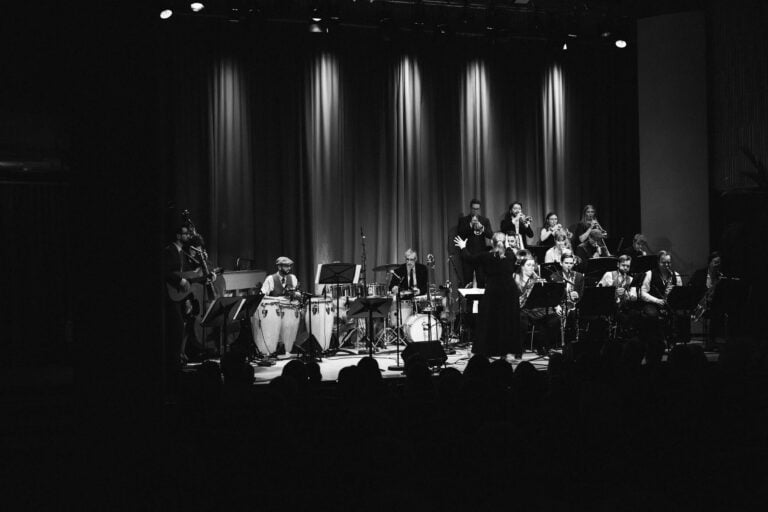
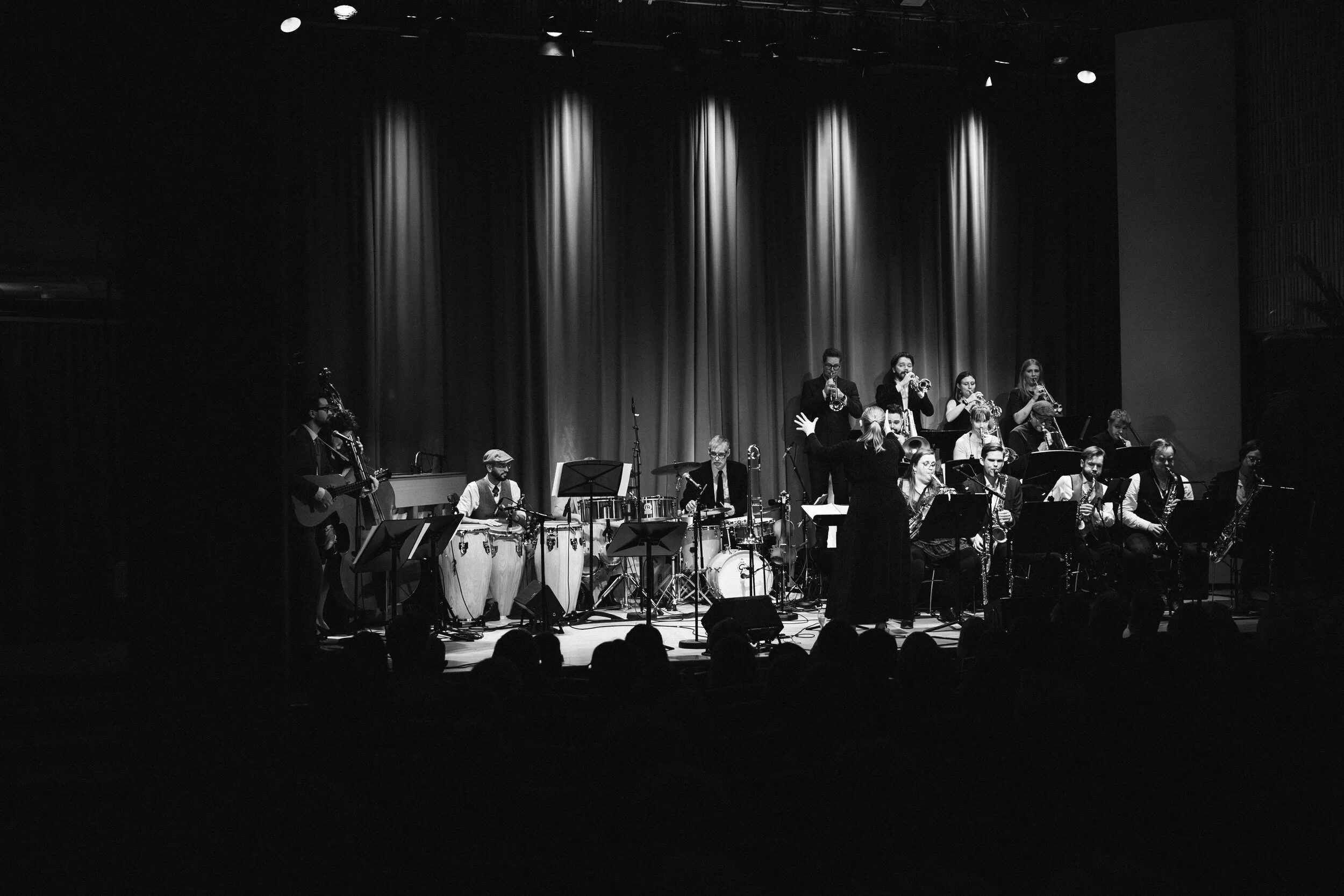
On August 26, Havanablús: Los Bomboneros will take over Harpa’s Norðurljós hall. Los Bomboneros and the larger Bombasticos ensemble will celebrate Tómas R. Einarsson’s music through new arrangements written for Latin big band.
This is not being presented as a quiet historical lecture. The festival describes a night of rhythm, jazz, salsa, and music designed to move the audience. The program includes a large ensemble, multiple arrangers, conductor Sigrún Kristbjörg Jónsdóttir, and special guests Mugison and Sigtryggur Baldursson.
The scale of the event says something important. Tómas’s relationship with Cuban music is not being treated as a curious side project from earlier in his career. His compositions are being opened up for a new generation of Icelandic musicians and arrangers, then placed inside one of Reykjavík Jazz Festival’s central evening programs.
The festival returns to his work again on August 30 with a separate tribute concert. Across the six-day program, Tómas is therefore not simply mentioned. His music becomes one of the recurring threads holding the festival together.
María Magnúsdóttir and a Different Route Into Latin America
Two nights after Havanablús, the festival turns toward Latin America from a different direction.
On August 28, María Magnúsdóttir will perform A Tribute to the Singers of Latin America at Harpa.

María’s path did not begin in Cuba. It began through time spent as an exchange student in Argentina, where she learned Spanish and became immersed in Argentine musical traditions. That experience developed into a broader fascination with influential women singers from across Latin America.
Her Reykjavík Jazz Festival program pays tribute to Mercedes Sosa of Argentina, Susana Baca of Peru, Astrud Gilberto of Brazil, Omara Portuondo of Cuba, and other major voices.
The ensemble itself reflects the project’s breadth. María is joined by guitarist Ásgeir Ásgeirsson, bassist Sigmar Þór Matthíasson, percussionist and trombonist Sigrún Kristbjörg Jónsdóttir, and drummer Rodrigo Lopes.
This is not another version of Tómas’s story. María is approaching Latin America through voice, song, language, interpretation, and the legacy of women performers. That difference is precisely why the two projects belong together in this conversation.
Tómas’s connection moves through composition, bass, rhythm, recording, and long collaboration with Havana. María’s concert moves through the human voice and a song tradition crossing several countries. Together, they show that Latin American influence in Reykjavík is not arriving through a single genre or a single idea of what “Latin music” is supposed to sound like.
Why Omara Portuondo’s Name Matters Here
For many international listeners, Omara Portuondo is closely associated with Buena Vista Social Club. That project introduced her voice to a much larger global audience, but her importance to Cuban music is much deeper than one internationally successful recording.
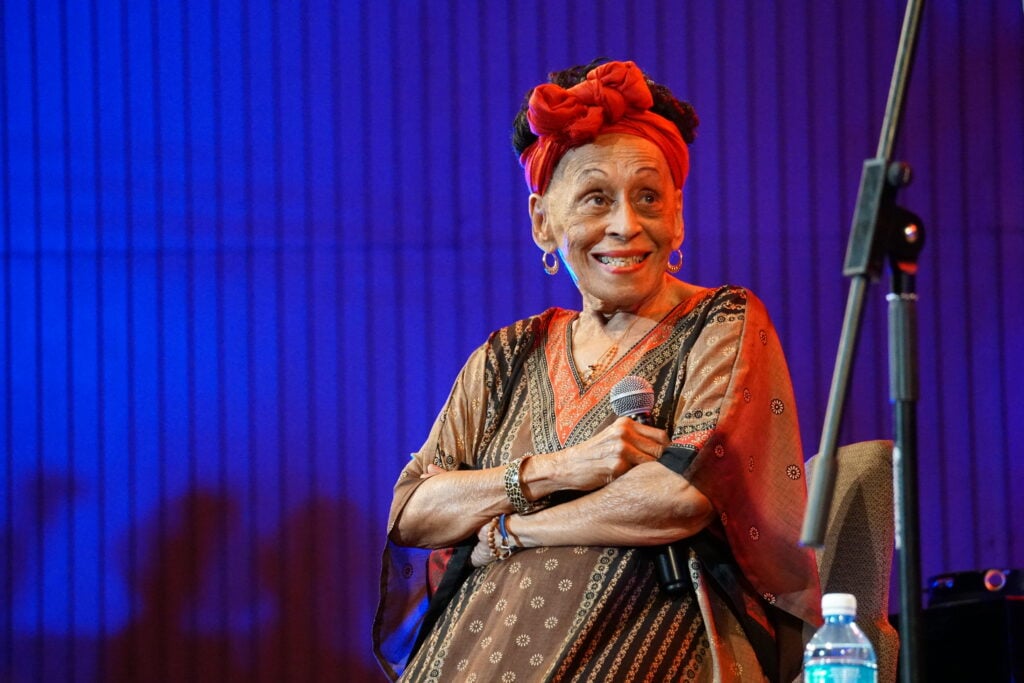
Omara represents decades of Cuban vocal interpretation, musical memory, collaboration, and continuity. Her voice carries connections to Cuban song, bolero, popular dance music, jazz, and the intimate relationship between a singer and a lyric.
For a Cuban musicologist, seeing Omara included in an Icelandic singer’s tribute is not simply an interesting celebrity reference. It reveals how far Cuban interpretive traditions have traveled. An artist in Reykjavík can hear something in Omara’s phrasing and repertoire that remains meaningful outside the original national context.
At the same time, María’s tribute places Omara beside Mercedes Sosa, Susana Baca, Astrud Gilberto, and other women whose careers emerged from very different histories. That broader framing is valuable. It avoids treating Latin America as a single musical culture while still recognizing the conversations that can exist between its voices.
The Cuban element is one part of the program, but it is a particularly meaningful part for us because of the work we have done for years with Cuban musicians, cultural workers, and the Havana Jazz Festival.
Cuban Music Travels Through People, Not Just Records
It is easy to describe Cuban music as globally influential. That is true, but the phrase can become so broad that it stops explaining anything.
Influence does not travel on its own. People carry it.
It travels when an Icelandic musician learns Spanish and discovers that language changes how he understands Cuban culture. It travels when he goes to Havana and records with Cuban musicians instead of attempting to recreate the entire musical world from a studio in Reykjavík. It travels when another Icelandic artist hears Omara Portuondo and decides that her work belongs inside a concert honoring the great women singers of Latin America.
It also travels through arrangers, conductors, instrumentalists, translators, producers, festival programmers, and audiences. Each person changes the route slightly.
That is why cultural exchange is rarely a straight line. A Cuban rhythm recorded in Havana may later be arranged for a large Icelandic ensemble at Harpa. An Icelandic bassist may bring his own country’s poetry and sense of musical identity into a Latin rhythmic framework. An Icelandic singer shaped partly by Argentina may interpret a song associated with one of Cuba’s most significant voices.
The result is not Cuba transplanted intact into Iceland. It is evidence that musicians in Reykjavík have been listening carefully to Cuba and Latin America, then responding from their own place.
Why This Connection Matters to Musical Getaways
Musical Getaways grew in large part from the work of Havana Music Tours and from years of building music-focused experiences in Cuba. Our approach has always combined professional musicianship, musicology, cultural interpretation, and relationships with the artists and communities behind the music.
That background changes what we notice when we look at the Reykjavík Jazz Festival lineup.
We are excited by Icelandic jazz for its own reasons. It does not need a Cuban connection to make it valuable. Reykjavík has its own creative identity, its own musicians, and its own way of bringing improvisation, composition, experimentation, and collaboration together.
But discovering these Havana and Latin American threads makes the relationship feel unexpectedly familiar. The Reykjavík festival and Havana Jazz Festival are very different experiences, yet both demonstrate how jazz creates room for local identity and international exchange at the same time.
That is one of the most important reasons we build travel around music festivals. A normal itinerary can show you monuments, neighborhoods, landscapes, and restaurants. A festival shows you what a culture is creating now. It places local musicians in conversation with international artists and allows travelers to hear connections that may not be visible on a map.
In Reykjavík in 2026, one of those connections runs all the way to Havana.
Experience the Havana-Reykjavík Connection in Person
Our Reykjavík Jazz Festival Tour runs August 25–31, 2026, and is limited to eight travelers. The journey is being developed in partnership with Reykjavík Jazz Festival and combines curated festival access with Reykjavík’s cultural life, Icelandic food, geothermal bathing, and the landscapes surrounding the city.
The festival itself runs August 25–30. That means travelers can experience Havanablús, María Magnúsdóttir’s tribute to the singers of Latin America, the separate Tómas R. Einarsson tribute concert, and the wider Icelandic and European jazz program within the same week.
For an introduction to the broader lineup, read our Reykjavík Jazz Festival Listening Guide. To explore the complete journey, visit the full Reykjavík Jazz Festival Tour itinerary or contact Musical Getaways for availability.
Hear the scene in its own setting through our Reykjavík Jazz Festival Tour. Future departure dates are being planned; the page includes a sample itinerary and an interest list. Our festival listening guide offers more preparation.