 Skip to content
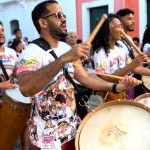
When I listen to Cuba and Colombia side by side, I do not hear one country simply borrowing from the other. I hear a Caribbean conversation.
That conversation is older than salsa and the record industry. It can be followed through forced migration, port cities, instruments, radio, dance floors and musicians who carried repertories from one place to another and changed them.
One instrument makes the story surprisingly tangible: the marímbula. Follow it from early Cuban son to San Basilio de Palenque, and a much larger musical map appears.
Before son and salsa: a shared Atlantic history
Any discussion of Cuba and Colombia through music has to begin carefully. The transatlantic slave trade and colonial slavery forcibly displaced people from many parts of West and Central Africa into both societies. Their musical knowledge did not arrive as one uniform “African rhythm.” Different communities preserved, adapted and recombined practices under different local conditions.
In Colombia, Cartagena became a major colonial port. Nearby San Basilio de Palenque was founded by people who escaped slavery in the seventeenth century. UNESCO describes its cultural space as preserving musical, oral, social and religious traditions with African roots, including bullerengue sentado, son palenquero and son de negro. We explore this history more closely in our guide to African heritage in Cartagena.
In Cuba, African-derived practices also developed through particular communities and cities. UNESCO’s description of Cuban rumba emphasizes its strong association with African culture alongside Antillean and Spanish elements, and its history in working-class neighborhoods around Havana, Matanzas and other ports.
The point is not that Cuba and Colombia inherited the same music. Both became part of a wider Afro-Atlantic world in which musical knowledge survived displacement and kept evolving.
The marímbula makes the connection audible
The marímbula is a wooden resonating box with flexible metal tongues that are plucked to produce low notes. The Smithsonian describes it as an African-derived instrument found across the Caribbean. In ensemble playing, it functions much like a bass.
It also occupies a special place in early Cuban son. The Smithsonian’s National Museum of the American Latino identifies the marímbula as part of son’s early sound, before string bass became standard in many urban groups.
Then the story moves to Colombia.
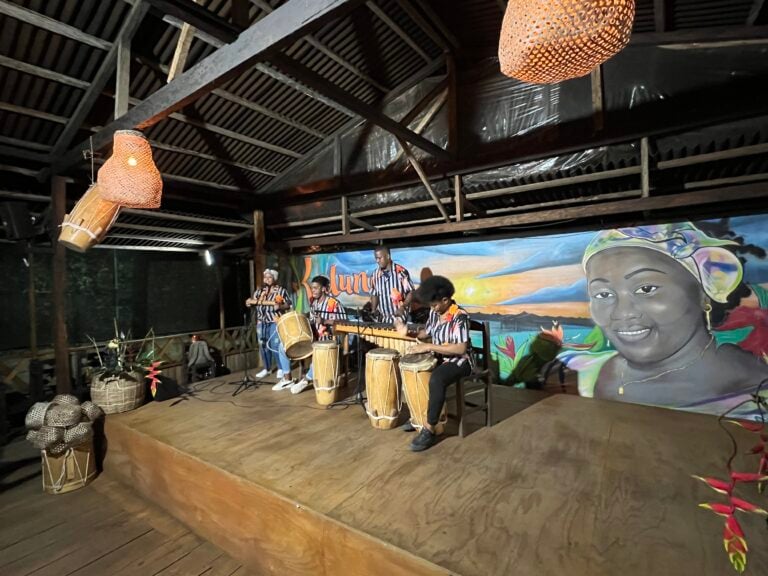
In a 2024 profile from Colombia’s Ministry of Cultures, Palenquero singer José Valdés Terán, known as Paíto, recalls a family tradition that included the marímbula. His Sexteto Hijos de Benkos performs with marímbula, bongos, clave, maracas, guacharaca and voice.
Even more revealing is the local history attached to the sexteto tradition. Paíto and Palenquero historian Alfonso Cassiani describe Cuban workers arriving in the region in the late 1920s and sharing a Cuban sextet format with local musicians. Palenque did not simply reproduce Cuban son. The community absorbed the format into an older musical world of drums, bullerengue, lumbalú and other practices, eventually creating its own son palenquero.
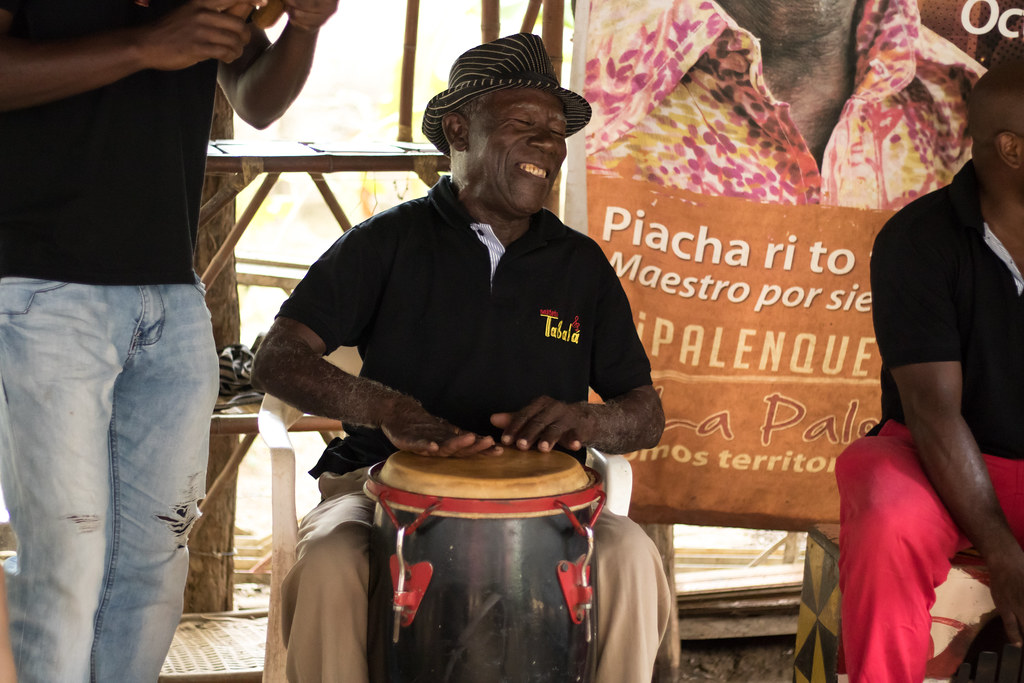
This is musical exchange in its most interesting form: not imitation, but transformation.
One important clarification: the marímbula is not Colombia’s marimba de chonta. The marímbula is a plucked lamellophone used as a bass. The marimba de chonta, central to traditions of Colombia’s Pacific coast, uses tuned wooden bars struck with mallets. Similar names, different instruments and histories.
Son becomes a Caribbean vocabulary
Cuban son developed around the relationship between voice, dance, percussion and strings, especially the tres. Clave organizes the rhythmic structure, while bongó, maracas, bass and other instruments create interlocking parts. In many son forms, a song section gives way to a montuno built around repeated chorus and improvised lead singing.
In 2025, UNESCO inscribed the practice of Cuban son on the Representative List of the Intangible Cultural Heritage of Humanity, recognizing its combination of African and European influences, improvisation, dance and community transmission.
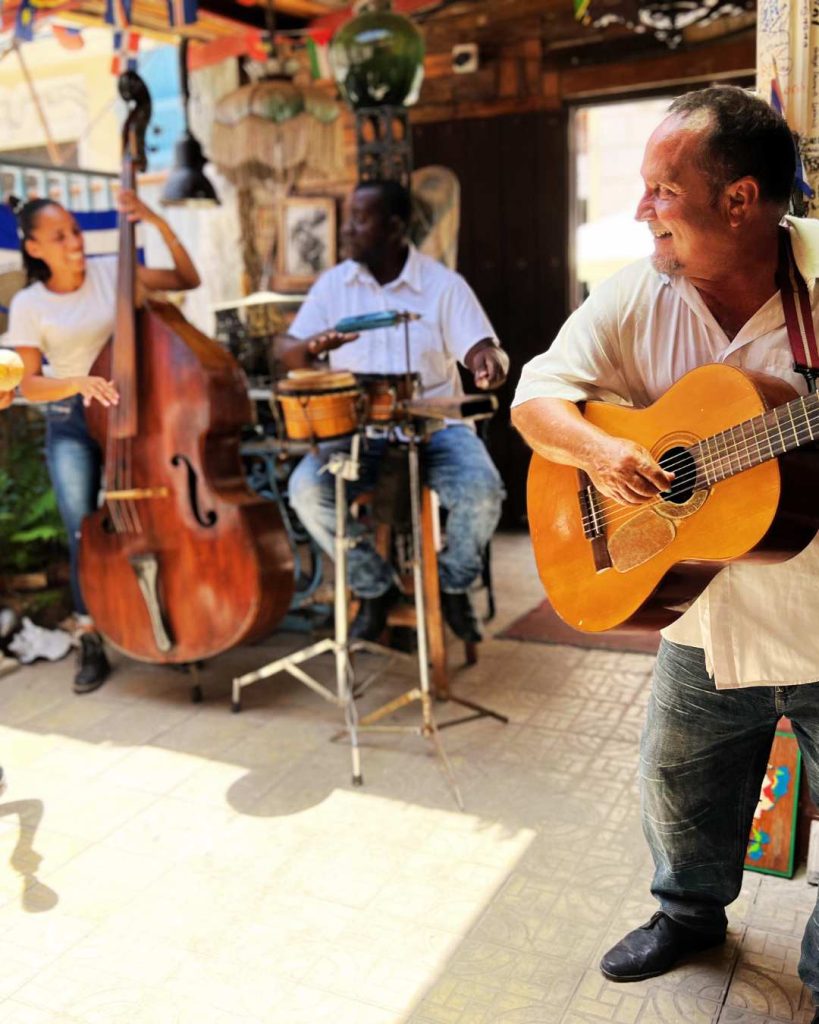
Recordings, radio, touring orchestras and maritime routes carried Cuban music throughout Latin America. Colombian Caribbean cities became receptive listening environments, while records entering through Buenaventura helped feed the musical culture that would later make Cali inseparable from salsa.
But the exchange was never only Cuba to Colombia.
Nelson Pinedo and the bridge in both directions
Barranquilla-born singer Nelson Pinedo offers a clear human example. He traveled to Cuba and joined La Sonora Matancera in 1953.
His first recording with the group was “El ermitaño,” written by Colombian composer Rafael Escalona. Pinedo also pushed for Colombian repertory within one of the most influential Cuban popular-music ensembles of the period.
That matters because musical history is often described with arrows: Cuba influenced Colombia, New York influenced Cali, Africa influenced the Caribbean. Real musicians make the map messier. They travel with songs, accents and memories, and influence can reverse direction within a single recording session.
Salsa: Cuban foundations, New York transformation, Colombian reinvention
Salsa is where this shared history is most audible today, but also where origin stories become oversimplified.
Salsa was not simply invented in Cuba and exported. The Smithsonian describes a musical style that developed primarily in New York and other urban centers around the late 1960s and early 1970s. Cuban son, mambo and rumba supplied essential rhythmic foundations, while Puerto Rican musicians and traditions, jazz and the experience of Latino communities in New York transformed that material.
Then Colombia transformed it again.
Cali had been listening to Afro-Caribbean music for decades. The city’s own historical accounts describe Cuban, Puerto Rican and later New York records arriving through radio and the Pacific port of Buenaventura. By the 1970s and 1980s, Cali was no longer merely consuming salsa. Dancers, collectors, DJs, clubs and Colombian orchestras were creating a local culture with its own repertoire and physical language.
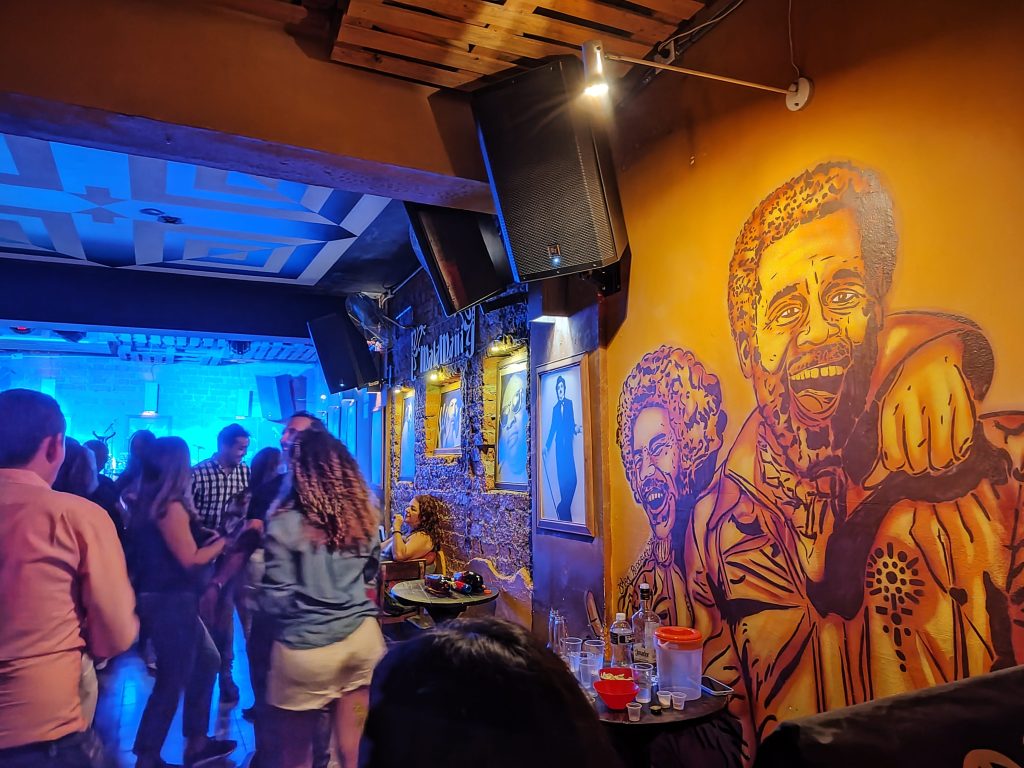
Grupo Niche, Guayacán and other Colombian ensembles became part of the international salsa canon. Cali’s dancers developed a style recognizable for its rapid footwork. A musical language with strong Cuban ancestry had become unmistakably Colombian. Our article Cali, Colombia: Music that Builds a City looks more closely at the city behind that culture.
Cumbia reminds us that Colombia brought its own language
Colombia’s Caribbean music was never an empty space waiting for Cuban influence. Cumbia developed through Indigenous, African and European cultural interaction. Colombia’s Ministry of Cultures points to gaitas or caña de millo, African-influenced drums, dance and the social life of the Bajo Magdalena.
When Colombian musicians entered trans-Caribbean orchestras and recording networks, they carried cumbia, porro and other repertories with them. The result was not a neat family tree. It was a network in which Cuban son, Colombian coastal music, Puerto Rican traditions, New York jazz and salsa repeatedly met.
What I listen for
- Listen to the bass. In early son and Palenquero sextetos, the marímbula reveals an older layer of the ensemble.
- Find the clave or reference pattern, then notice how other instruments play around it.
- Follow call and response between lead singer and chorus.
- Notice what changes when music travels. Instrumentation, tempo, dance and accent are often where a community makes repertory its own.
- Listen by place. A son in Santiago de Cuba, a sexteto in San Basilio de Palenque and salsa in Cali can share history without functioning the same way socially.
The connection is a journey, not a straight line
The musical relationship between Cuba and Colombia cannot be reduced to “Cuba gave Colombia salsa,” or any other one-directional story. It is a Caribbean network shaped by African diaspora, colonial history, resistance, ports, migration, radio, records, touring musicians and dancers.
The marímbula makes that network visible in a single instrument. Son shows how a Cuban tradition became an international vocabulary. Palenque shows how a community received that vocabulary and made it its own. Salsa shows the conversation continuing through New York and returning to Colombia in another form.
This is why music travel matters to us. When we listen in the places where these traditions live, history becomes more than chronology. It becomes sound, movement and human connection.
Our Colombia music journeys offer several ways to experience these traditions where they live. Travelers can join one of our scheduled small-group departures, including journeys through Cartagena, San Basilio de Palenque and Cali, or work with us to create a private, tailor-made Colombia journey built around particular musical interests, destinations and dates.
Whether the focus is salsa in Cali, Afro-Colombian traditions along the Caribbean or Pacific coasts, or a deeper exploration connecting several regions, music is the thread that guides the journey. Travelers interested in following the Cuban side of this story can explore Cuba with our sister company, Havana Music Tours.