 Skip to content
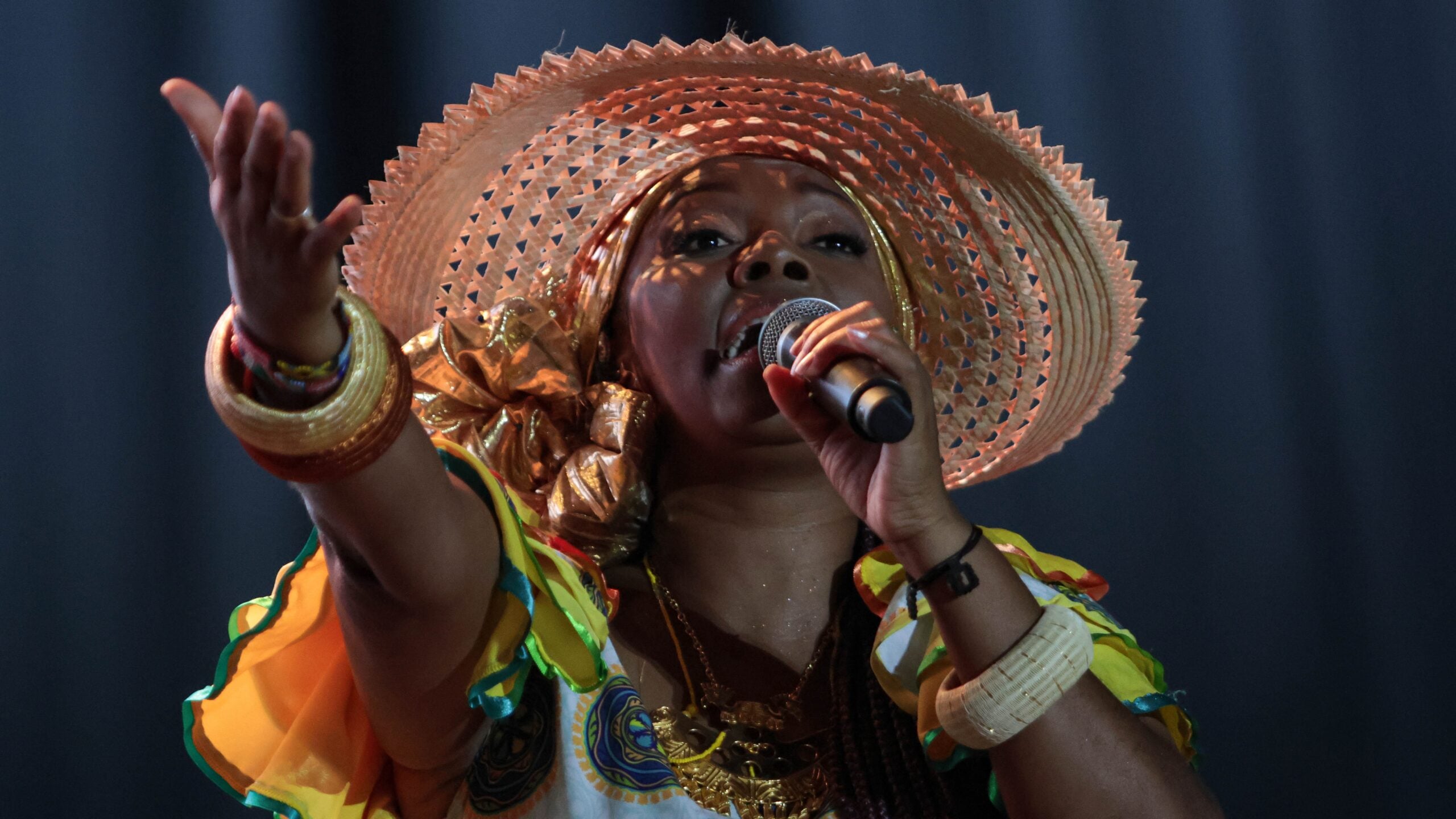
Some artists help us understand a place before we ever arrive there. For me, Nidia Góngora is one of those artists. Her music carries the rivers, mangroves, voices, family memories, and community traditions of Colombia’s Pacific coast. She is not only a singer. She is a cantora, a researcher, an educator, and one of the most important cultural figures connected to the music of Timbiquí, Cauca.
Nidia Góngora was born in Timbiquí, a town on Colombia’s Pacific coast where music is not separated from daily life. It is part of family gatherings, religious ceremonies, celebrations, grief, work, and memory. In fact, she grew up in a musical family and became known as one of the leading voices of the marimba music and traditional singing from the Colombian South Pacific. Her work is closely tied to Canalón de Timbiquí, the group she founded and leads. This group has helped bring this music to stages around the world. At the same time, they keep a strong connection to its community roots.
A Guardian of Pacific Tradition
To understand Nidia Góngora, it helps to understand the role of the cantora in Afro-Colombian Pacific culture. A cantora is not just a vocalist. She is a keeper of stories, melodies, spiritual practices, and community knowledge. This music has been passed through generations, often through women. It carries the history of Afro-descendant communities along the rivers and coastal towns of the Pacific.
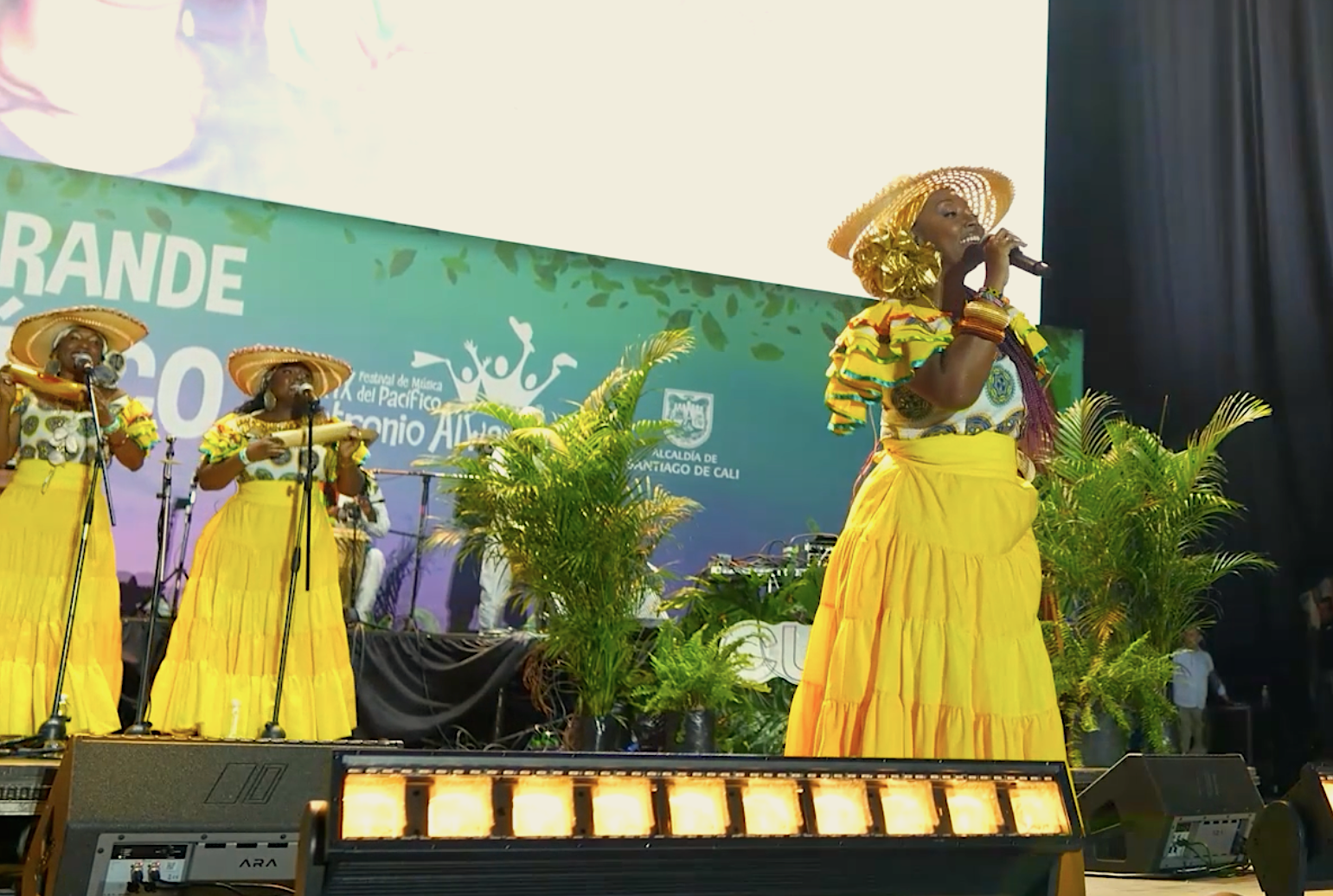
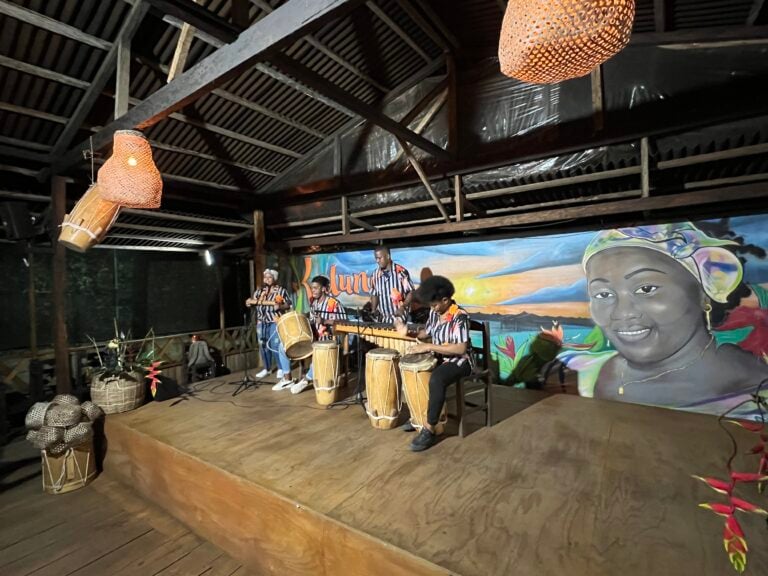
The sound world of this region often includes marimba de chonta, cununos, bombos, guasás, and call-and-response singing. UNESCO recognizes marimba music, traditional chants, and dances from Colombia’s South Pacific region and Ecuador’s Esmeraldas province as Intangible Cultural Heritage of Humanity. In addition, UNESCO notes its role in collective memory, cultural identity, and social resistance.
That context is important because Nidia’s music is beautiful, but it is also deeply responsible. She is carrying something that belongs to a people, a region, and a lineage. When she sings, you can hear the influence of river communities, ancestral ceremonies, Catholic and African spiritual crossings, and the strong presence of women who have preserved these forms through their voices.
From Timbiquí to the World
Many listeners outside Colombia first discovered Nidia Góngora through her collaborations with Quantic, the British producer and musician Will Holland. Their albums Curao and Almas Conectadas introduced her voice to global audiences. At the same time, they kept the Pacific coast present in the center of the music. These projects helped build a bridge between traditional Afro-Colombian music, electronic textures, cumbia, salsa references, and contemporary global sounds.
But Nidia’s importance goes far beyond collaboration. With Canalón de Timbiquí, she has been part of recordings and performances that have strengthened the visibility of Pacific music in Colombia and abroad. Canalón’s album De Mar y Río was nominated for Best Folk Album at the Latin Grammy Awards in 2019. In addition, Nidia has also been recognized with awards, including the Shock Award for Best Folk Album.
Her work also includes education. Through Fundación Escuela Canalón in Cali, she has helped train younger musicians and transmit traditional music in both school and community settings. That part of her work matters to me because it shows that her career is not only about performance. In fact, it is about continuity. It is about making sure that children and young musicians from the Pacific region can see their culture as something valuable, powerful, and worthy of study.
A New Chapter: Pacífico Maravilla
In 2025, Nidia released Pacífico Maravilla, a major solo project that feels like a personal and artistic statement. The album brings together her own compositions, collaborations, and the musical language of the Pacific in a way that feels intimate and expansive at the same time. Additionally, Apple Music lists the album as a 2025 release on Positivo Records, and World Music Central described it as a tribute to the music and resilience of the people of Colombia’s Pacific coast.
The title itself says a lot. Pacífico Maravilla points to the beauty of the region, but also to its strength. The Pacific coast of Colombia has given the country some of its most important music, foodways, oral traditions, and cultural leaders. At the same time, many communities there have faced deep inequality, displacement, and lack of visibility. Therefore, artists like Nidia help bring attention to that complexity without reducing the culture to a simple tourist image.
Her recent international presence also shows how much interest there is in this music right now. In spring 2026, she performed across the United States, including dates at Flushing Town Hall in New York, the Musical Instrument Museum in Arizona, Old Town School of Folk Music in Chicago, the University Musical Society in Michigan, Radio/East in Austin, and the New Orleans Jazz & Heritage Festival.
Why Nidia Góngora Matters at Petronio Álvarez
The Petronio Álvarez Festival in Cali is one of the most important places to experience this music in its full cultural context. The festival brings together musicians, cooks, instrument makers, dancers, elders, young artists, and communities from across Colombia’s Pacific region. It is not only a concert series. Instead, it is a meeting place for the living traditions of the Pacific.
Nidia Góngora represents so much of what makes Petronio special. She connects ancestral knowledge with contemporary creativity. She honors the role of women in Pacific music. She brings Timbiquí to international stages without losing the feeling of home. She reminds us that music can be artistic, educational, communal, and historical all at once.
For travelers who want to understand Colombia beyond the usual route, Petronio Álvarez is one of the most meaningful cultural experiences in the country. The 2026 festival is scheduled for August 14 to 19 in Cali. Our Petronio Álvarez Festival Tour is designed around that moment, with time in Cartagena, San Basilio de Palenque, and Cali from August 11 to 17, 2026.
If you are curious about Afro-Colombian music, Pacific culture, and the artists who are shaping how this tradition is heard around the world, Nidia Góngora is a beautiful place to begin. Also, if you want to feel this music surrounded by the people, food, instruments, and communities that keep it alive, Petronio Álvarez is where you should be.