 Skip to content

The New Orleans Jazz Fest 2027 lineup places Foo Fighters, Noah Kahan, The Who, Brandi Carlile, Gwen Stefani and James Taylor alongside musicians whose work helps explain the city hosting them. The headliners will draw attention, but the most interesting part of this program is the range of music you can hear: New Orleans funk, rhythm and blues, brass-band traditions, jazz and contemporary songwriting.
The Meters, Irma Thomas, Trombone Shorty & Orleans Avenue, Preservation Hall Jazz Band, PJ Morton, Rebirth Brass Band and Tank and the Bangas are all on the bill. Listen closely and you hear different approaches to musical time and texture: an economical bass line, a deliberately delayed vocal phrase, a collective horn passage, or a song that moves between spoken word and melody. Those differences are a better starting point than simply counting how many famous artists appear.
The festival’s official announcement of November 19, 2026 names artists by weekend, although the detailed daily schedule is still to come. Organizers also shared the news on Instagram. Here is how we would listen through the lineup, and what we would leave time to experience beyond the Fair Grounds.
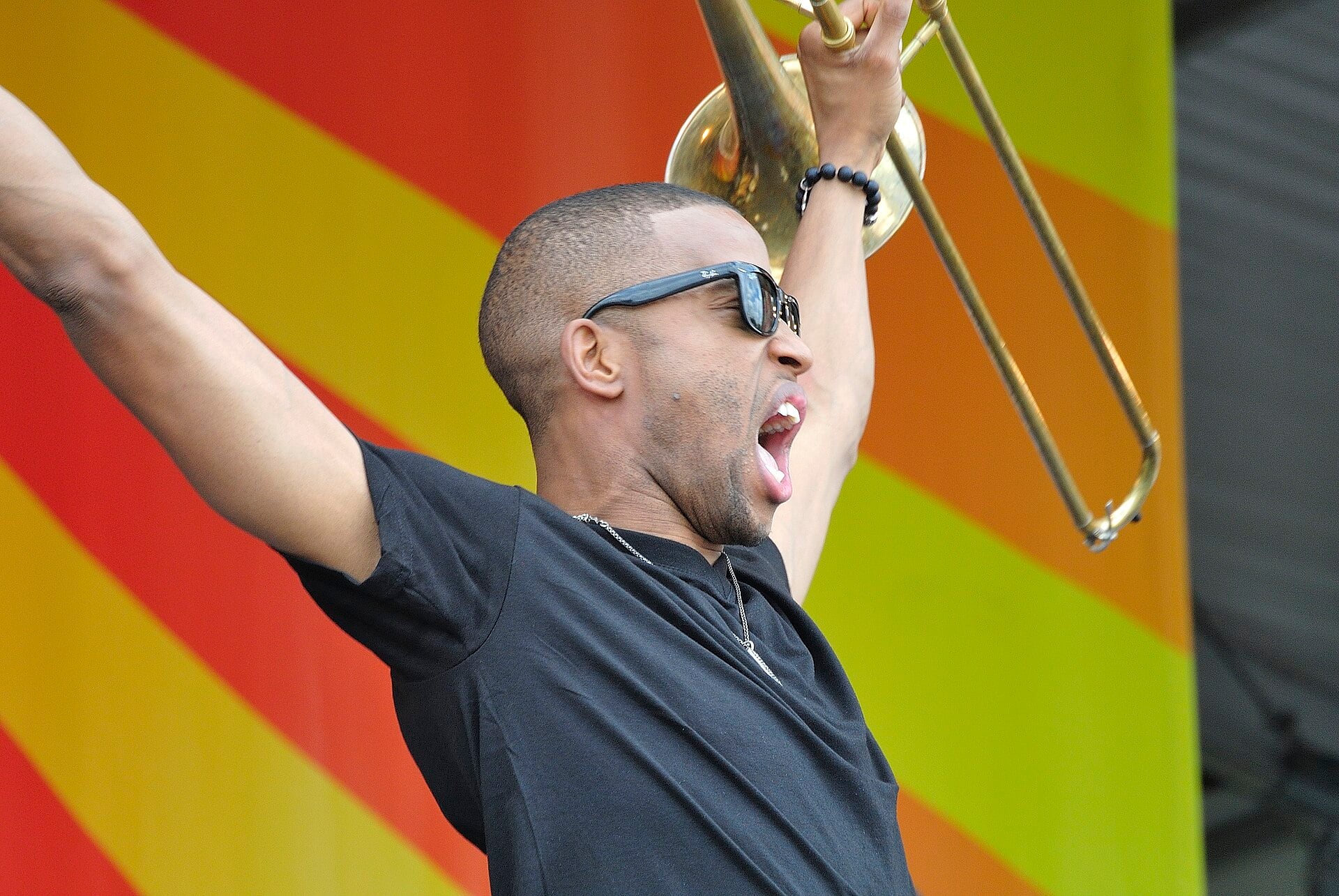
Featured photo: Trombone Shorty at Jazz Fest in 2012. Takahiro Kyono / Wikimedia Commons, CC BY 2.0; resized for web.
New Orleans Jazz Fest 2027: dates, venue and lineup status
Jazz Fest takes place over two four-day weekends at the Fair Grounds Race Course in New Orleans: April 22–25 and April 29–May 2, 2027. Organizers expect more than 5,000 musicians across 14 stages. The November announcement identifies the artists and their festival weekends, but it is not a final hour-by-hour stage schedule. As with any large festival, performances and logistics remain subject to change. Check the festival’s official website for the latest lineup, stage times, ticketing and visitor information.
The distinction matters. A list of names can tell you which weekend makes sense. It cannot yet tell you whether two musicians you love will perform at the same time, or whether an unplanned set in a smaller tent will become the highlight of the afternoon.
The first weekend: New Orleans funk at the center of a much bigger bill
Weekend one includes Foo Fighters, The Who, James Taylor, Jack White, Chaka Khan, Widespread Panic, Khruangbin, The Avett Brothers and numerous other national and international acts. But from a musician’s perspective, The Meters are a particularly revealing name on the roster. Their music shows how a band can create irresistible motion without playing more notes than the song needs.
Listen to the guitar, bass, drums and organ in Cissy Strut. Instead of each musician competing to fill every gap, the parts interlock. The rhythmic placement and the repeated figures make the groove. That approach became fundamental to New Orleans funk and to musicians far beyond the city. The festival has announced a performance under The Meters name; the final personnel for that appearance should not be assumed from the billing alone.
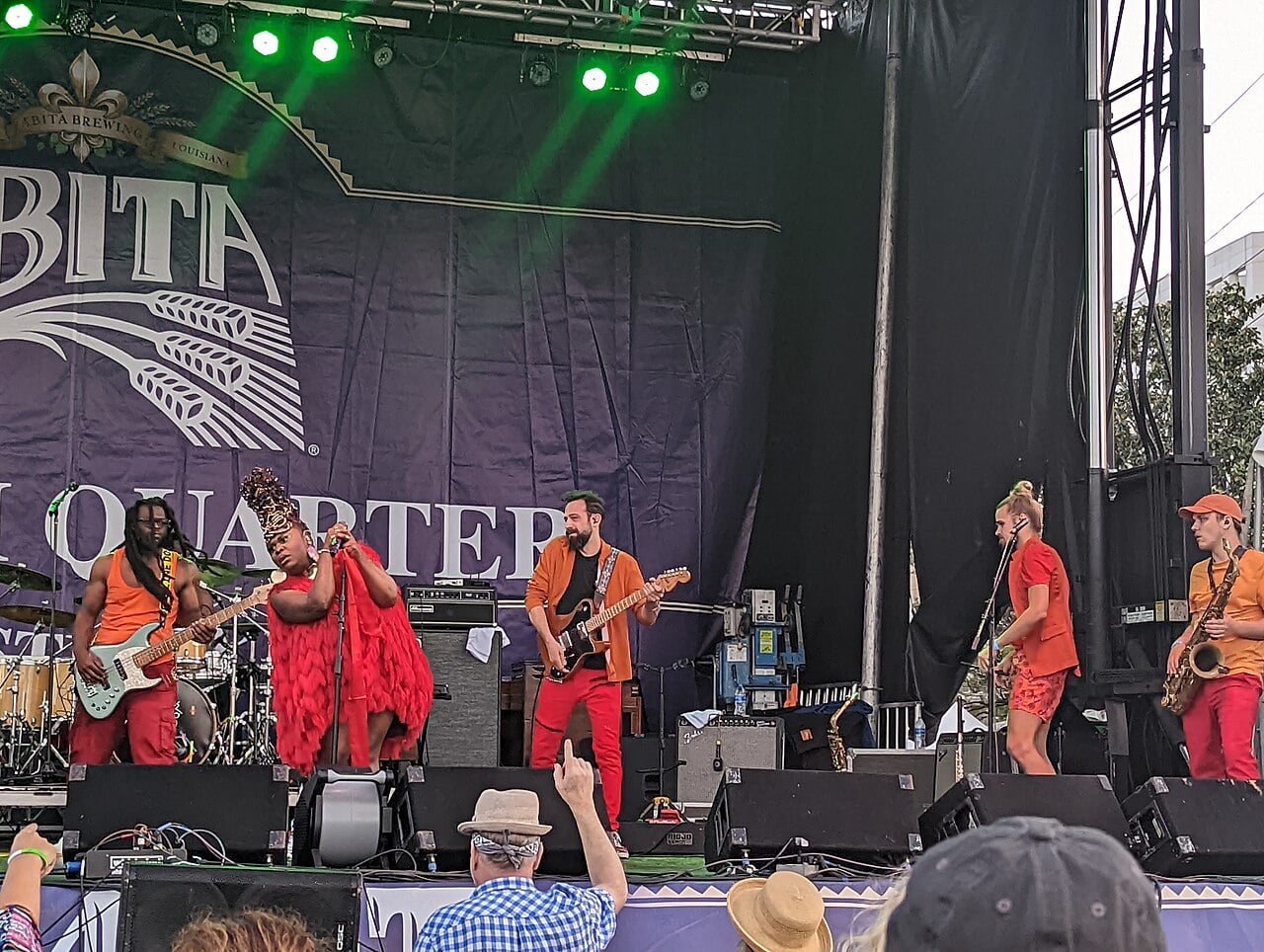
PJ Morton and Tank and the Bangas offer other ways into the city’s continuing creative life. Morton moves fluently between songwriting, gospel-informed harmony, R&B and pop. Tank and the Bangas approach song form through spoken word, soul, jazz phrasing and theatrical interplay. Their music is a useful reminder that New Orleans is not a museum of the styles invented there. Musicians keep changing the language.
The second weekend: Irma Thomas, Trombone Shorty and the art of a New Orleans performance
Weekend two features Noah Kahan, Brandi Carlile, Gwen Stefani, Jack Johnson, Matchbox Twenty, LL Cool J, Buddy Guy and Wyclef Jean. It also offers a compelling thread of New Orleans artists, including Irma Thomas, Trombone Shorty & Orleans Avenue and Preservation Hall Jazz Band.
Irma Thomas brings the authority of a great rhythm-and-blues interpreter. Her recordings reward close listening to timing: where a phrase begins, where it hangs back, and how a singer can make a lyric feel conversational without sacrificing musical precision. Trombone Shorty brings a different energy. Brass, funk rhythms and a contemporary band sound meet in performances that can move between solo improvisation and tightly arranged ensemble passages.
Preservation Hall Jazz Band points toward yet another tradition, where collective playing, rhythmic conversation and the relationship among horns are central. These groups should not be collapsed into a single timeless “New Orleans sound.” The pleasure lies in hearing the differences as well as their connections.

Brass bands, gospel and Mardi Gras Indian traditions
Some of the festival’s most rewarding music comes from musicians outside the largest names on the poster. The announced bill includes Rebirth Brass Band, The Dirty Dozen Brass Band, The Soul Rebels and Big Chief Monk Boudreaux & the Golden Eagles. New Orleans is also home to long-standing gospel, Cajun, zydeco and blues traditions. Big Chief Monk Boudreaux is part of the Black Masking Indian tradition, also widely known as the Mardi Gras Indian tradition. Rooted in African American communities in New Orleans, it includes songs and call-and-response chants, percussion, intricately hand-sewn suits and cultural leadership within the city’s neighborhoods. That history deserves to be understood on its own terms, not reduced to a colorful festival spectacle or confused with brass-band music.
For a visitor, a brass-band performance becomes more legible when you listen for the distribution of the groove. The tuba or sousaphone may carry a moving bass line, while snare and bass drum establish a flexible rhythmic foundation and the horns trade melodic statements. The sound of a second line is not simply a concert arrangement brought into the street: it belongs to specific social traditions and communities.
That is also why the Festival and Foundation’s history matters. The first Jazz Fest began in 1970, with a concept built around Louisiana music, food, crafts and culture as well as famous performers. The Foundation’s wider work now includes music education, cultural support and the preservation of Louisiana’s musical record. Understanding that mission changes how you read the lineup.
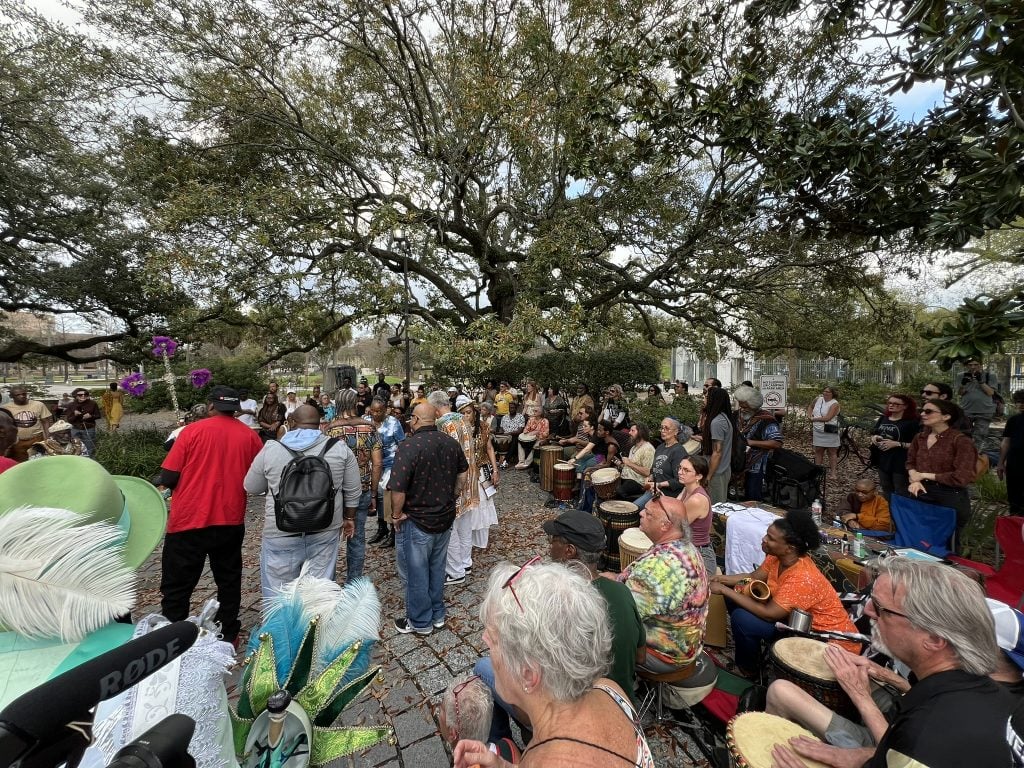
Congo Square also provides a way to discuss New Orleans’ complicated musical history without telling a neat origin myth. Berklee’s educational material on Congo Square traces the survival and influence of African and Afro-Caribbean music and dance practices. The gathering place is linked to traditions maintained by enslaved Africans and their descendants, yet the city’s musical development involved many neighborhoods, generations and communities. The square is a beginning for inquiry, not a substitute for the broader story.
The Bahamas is the 2027 Cultural Exchange focus
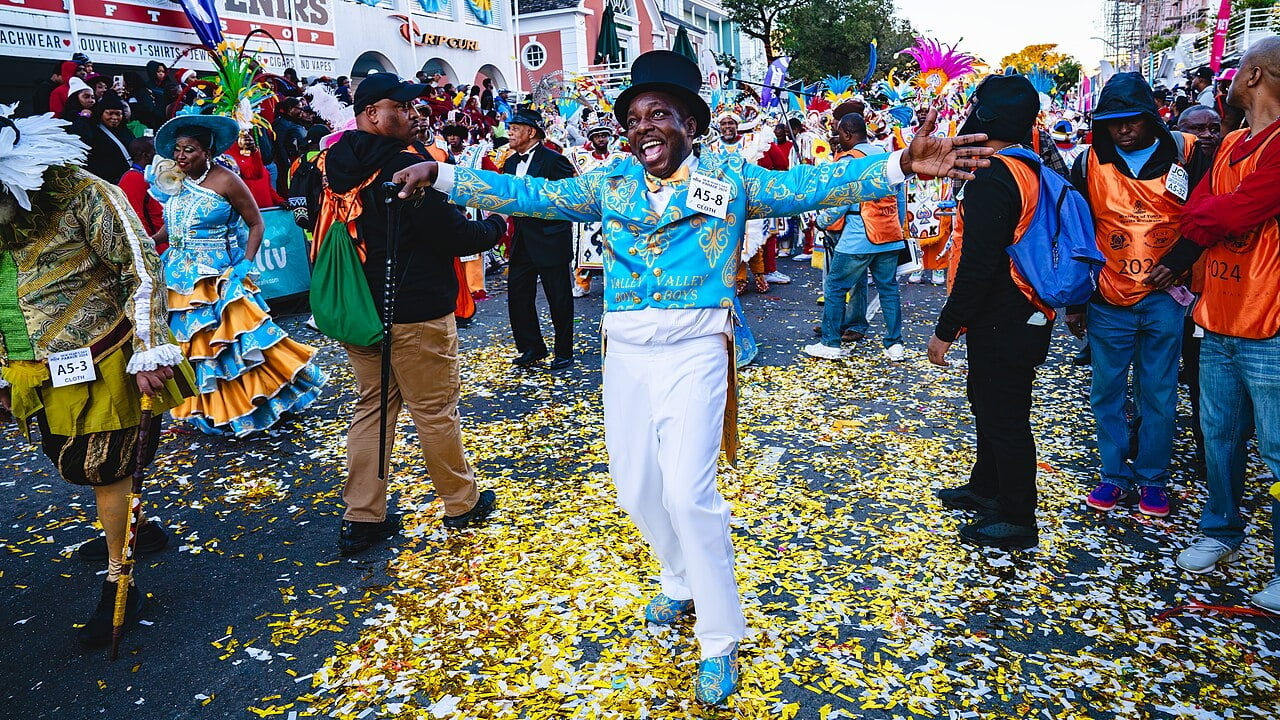
A particularly interesting aspect of the 2027 announcement is the Bahamas Cultural Exchange Pavilion. The festival is highlighting Bahamian artists and traditions across both weekends, with Baha Men announced for May 2. The program includes rake-n-scrape, a musical practice associated with the Bahamas in which a saw is scraped rhythmically, along with Junkanoo-related costume-making and other cultural presentations.
This is worth more attention than a quick photo of colorful costumes. Rake-n-scrape asks listeners to notice how timbre, dance pulse and repeated rhythmic figures work together. Junkanoo has its own history, communities and ceremonial meanings. The exchange provides an opportunity to hear a neighboring Caribbean musical culture on its own terms, while considering the longstanding movement of music and people around the Gulf and Caribbean. Similarities should invite questions, not assumptions that distinct traditions are interchangeable.
Which Jazz Fest 2027 weekend should you choose?
April 22–25 may be especially attractive to listeners interested in The Meters, PJ Morton, Tank and the Bangas, Chaka Khan and the relationship among funk, soul, rock and modern improvisation. April 29–May 2 has a different draw, including Irma Thomas, Trombone Shorty, Preservation Hall Jazz Band, Big Freedia and a strong mix of roots, pop, jazz and brass music. These are weekend-level descriptions, not confirmed daily assignments.
The best decision will depend on whether one artist is non-negotiable or whether you prefer to hear a wider range of musicians. In either case, do not plan the entire day around a rigid chain of headline sets. Leave time for an artist you do not know, a conversation, a meal and a performance that changes your expectations.
The music continues beyond the Fair Grounds
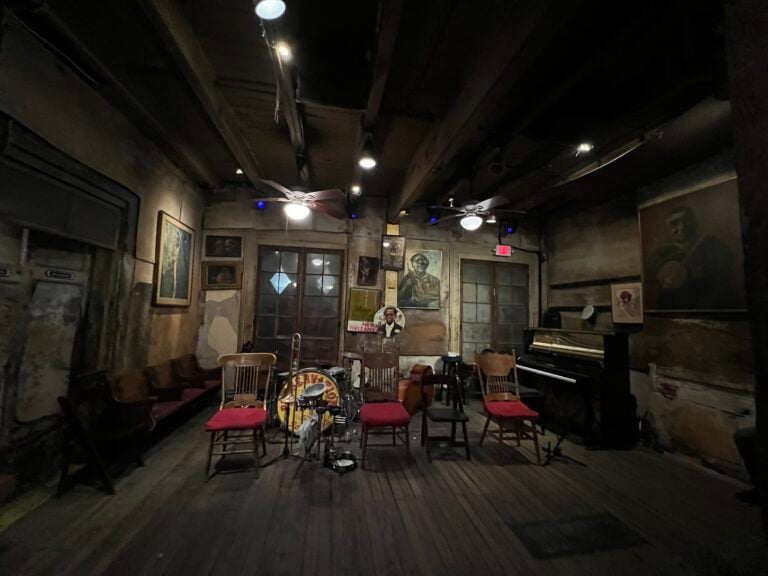
A festival ticket does not explain the city by itself. Many of the musical ideas heard at Jazz Fest make more sense after spending time in Tremé, listening in neighborhood clubs or visiting institutions such as Preservation Hall. The city has its own year-round networks of performers and audiences, and not all of its most important music happens on a festival stage.
In earlier Musical Getaways New Orleans programs, we have built days around local musician-guided walks, Congo Square and Tremé, performances at Preservation Hall and listening after dark. The purpose is not to cram in one more venue. It is to connect a performance with the people, histories and neighborhoods that give it meaning. For a closer look at how these traditions connect, see our musician’s guide to the city’s sound beyond jazz. Our New Orleans music-tour guide also compares a city-focused visit with a broader Southern journey.

For practical pacing, consider arriving before your festival weekend or staying afterward, rather than flying in for a single evening. Festival days can involve substantial walking, sun and competing performances. The official Jazz Fest travel information describes its express shuttle and current visitor arrangements; those details are more reliable than assuming a particular hotel-to-festival route will remain the same next spring. Keep some evenings open for live music, but do not build an itinerary that makes every night an endurance contest.
Five musical starting points before you travel
A listening list can make a large festival more personal. Try Cissy Strut by The Meters for the architecture of New Orleans funk; It’s Raining by Irma Thomas for vocal phrasing; Hurricane Season by Trombone Shorty for contemporary brass-driven arranging; Quick by Tank and the Bangas for the meeting of spoken word and groove; and That’s It! by Preservation Hall Jazz Band for the conversation between ensemble writing and improvisation. These are listening suggestions, not predictions of what anyone will perform in 2027.
The point is to begin hearing specific musical decisions. When a horn section enters, what changes in the rhythm? When a singer delays a phrase, where does the band leave room? When percussion patterns overlap, what makes them feel like one continuous pulse? Those questions turn a lineup into a set of discoveries.
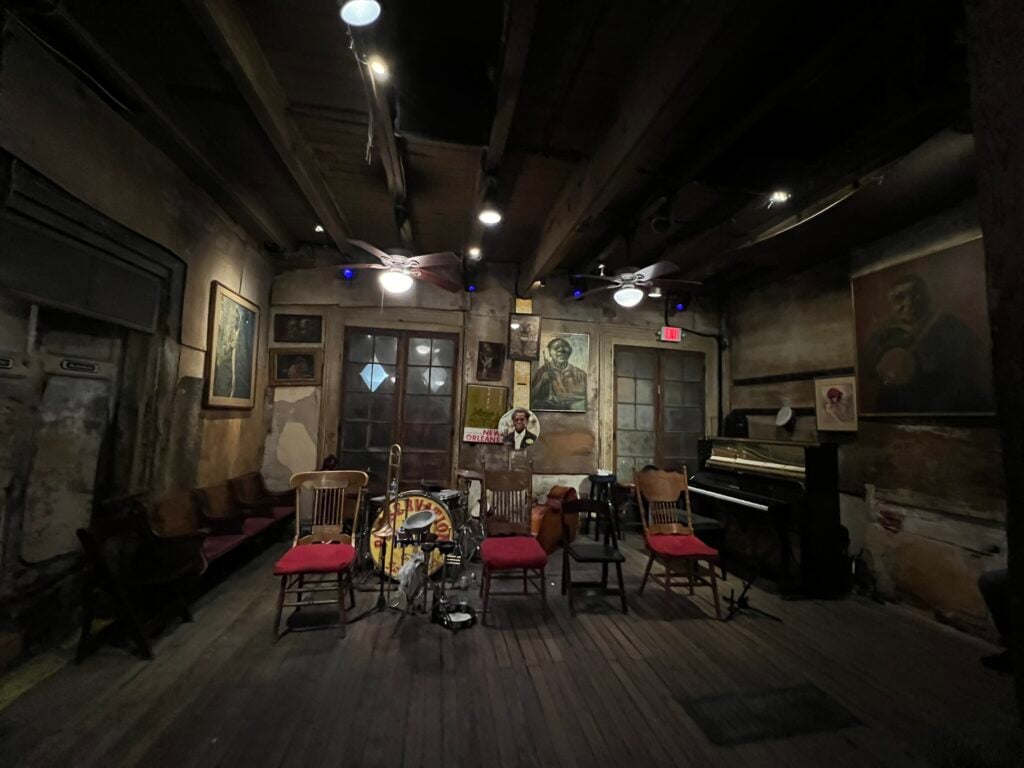
A Jazz Fest trip with more room for New Orleans
After a Jazz Fest weekend, what stays with you may be the way New Orleans musicians listen to one another. The Meters leave room inside the groove. Irma Thomas shapes the time in a song without losing the band. Brass musicians build a performance through responses and shared rhythmic ideas. Once you begin to hear those relationships, the city’s music makes more sense both on a festival stage and in a neighborhood room.
At Musical Getaways, we design music-focused New Orleans journeys with time for neighborhood history and live performances. We have not announced a 2027 Jazz Fest package or secured festival tickets or special access for one. If this lineup has you thinking about a private music-centered visit, our Design Your Journey page is a place to start that conversation. Tell us what you most want to hear and understand in New Orleans.