 Skip to content
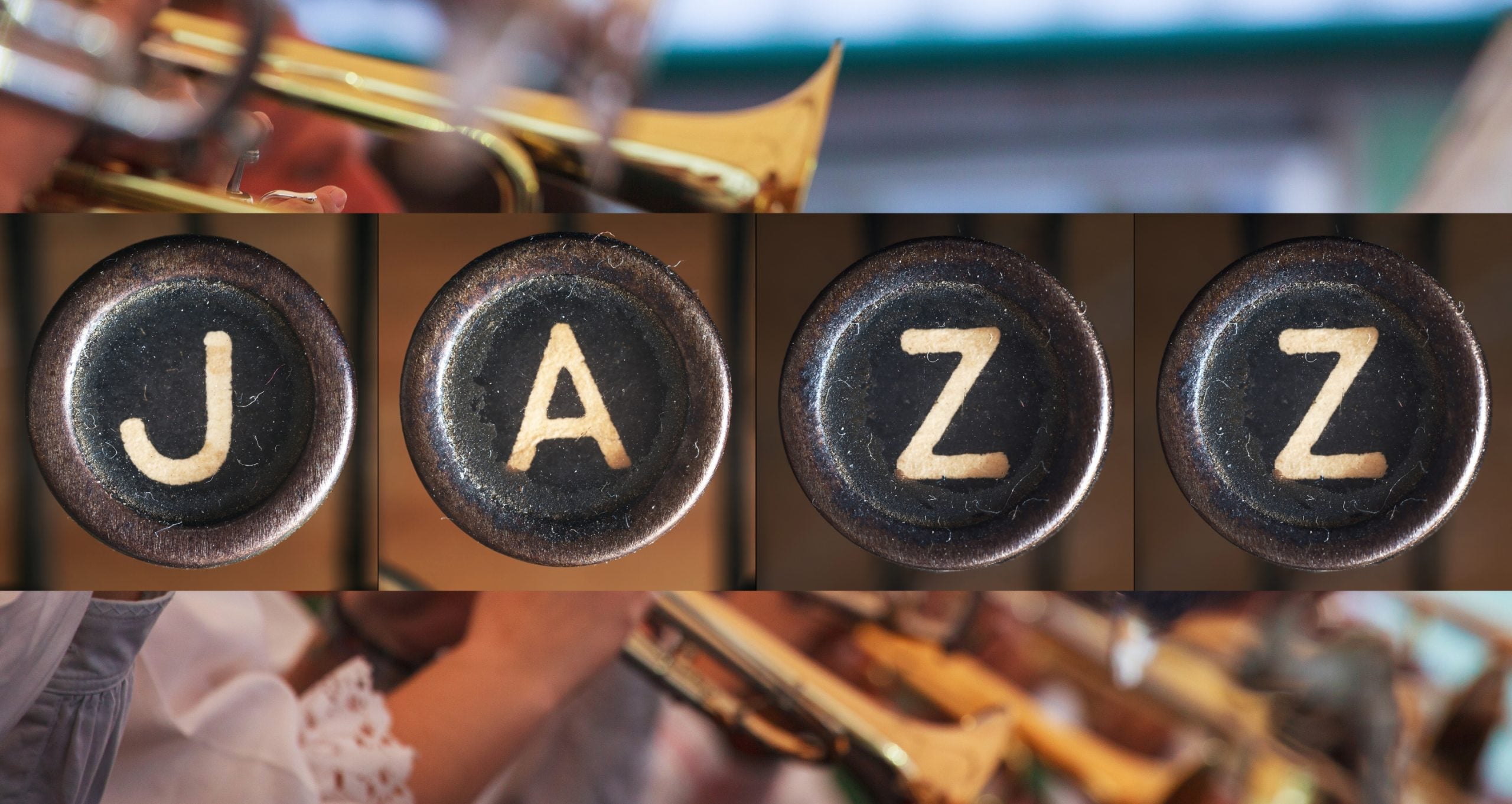
The Festival International de Jazz de Montréal began in 1980 as a modest undertaking. Its first edition took place on Île-Sainte-Hélène, drawing around 12,000 people to hear roughly 100 artists, including Chick Corea, Gary Burton, Vic Vogel, and Ray Charles. Ray Charles opened it. Founded by Alain Simard with André Ménard, Denyse McCann, and Alain de Grosbois, the festival set out to bring serious musicians to a public audience, and over four decades it has become the institution the rest of the field measures itself against. Guinness World Records recognizes it as the largest jazz festival on the planet.
As the 46th edition approaches in June 2026, the festival arrives in a year that carries unusual historical weight.
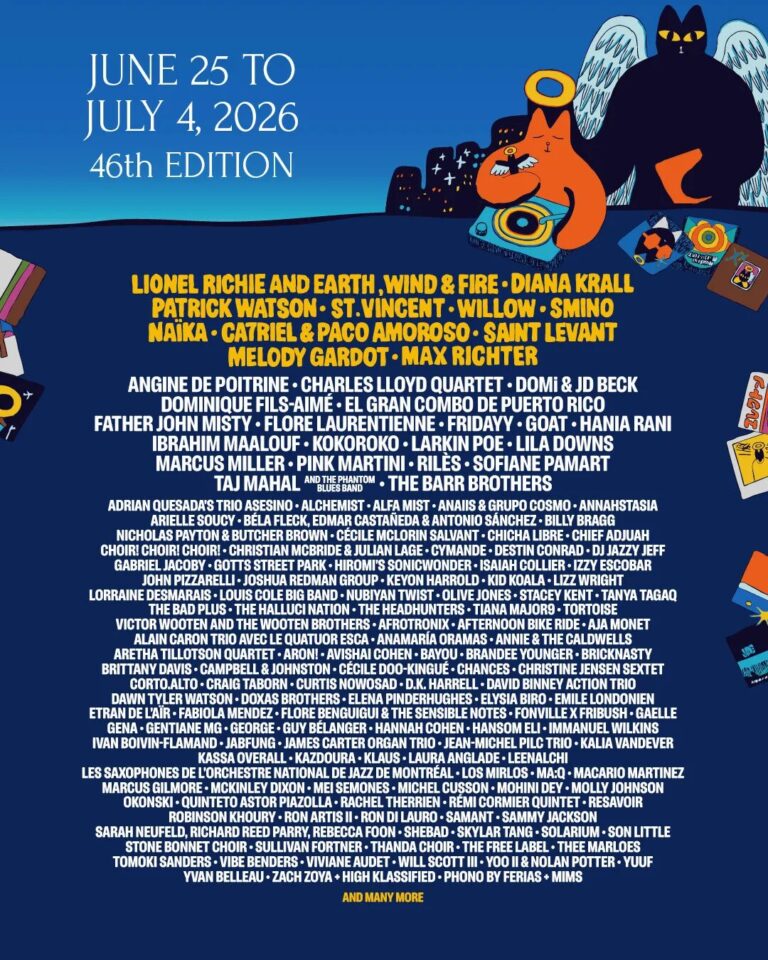
The Dates: June 25 to July 4, 2026
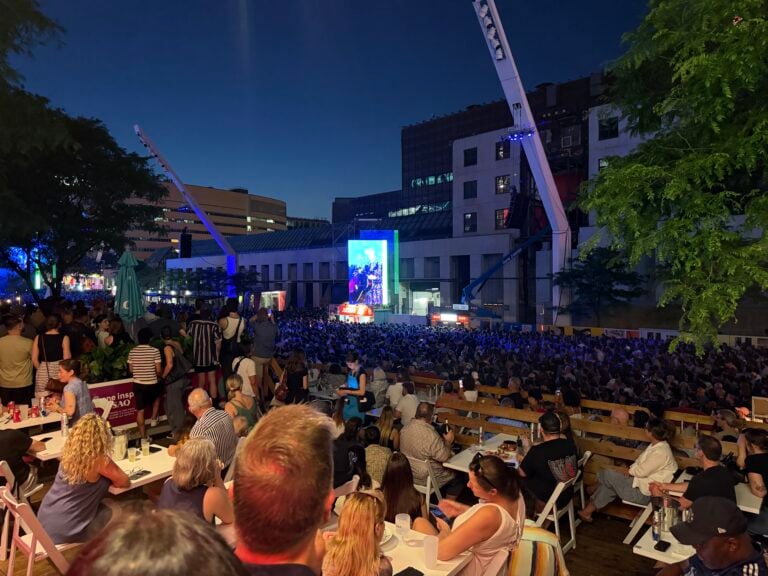
The 46th edition runs ten days, from June 25 through July 4. The program holds more than 350 concerts, two-thirds of them free, across downtown Montreal. The festival closes its streets to traffic and runs until midnight, with the main outdoor stages clustered at Place des Festivals.
Four Decades of Structural Evolution
The festival did not reach its current scale by accident. Its history is marked by a series of structural decisions that shaped how the music is staged and who gets to hear it.
- 1980–1988: Finding the form. The festival began on Île-Sainte-Hélène, transitioned to a non-profit structure in 1982, and moved to Saint-Denis Street. By 1986 it had over a thousand musicians on the program and launched its first large-scale free event, which became the midpoint of every festival thereafter.
- 1988–2004: The urban campus. In 1989, the festival relocated to the downtown core around Place des Arts, where the “urban campus” model was born, and reached a million visitors at its tenth anniversary that same year. In 2004, it entered the Guinness World Records as the world’s largest jazz festival after drawing close to two million people.
- 2009–Present: The permanent site. The 30th edition in 2009 saw the opening of Place des Festivals and the Maison du Festival, and Stevie Wonder’s free outdoor show drew more than 200,000 people. The festival now hosts roughly 150 indoor concerts alongside more than 350 free outdoor shows each year.
The 2026 Lineup: A Centennial Year
The 2026 programming is organized around a coincidence of dates. This is the centennial of Miles Davis, John Coltrane, and Tony Bennett, all born in 1926, and the festival has built much of its indoor programming around that.
The tributes reward attention because of who is performing them. Marcus Miller, Davis’s final musical director, leads the “We Want Miles” centennial concert at the Maison Symphonique. A separate evening pairs a live performance of Kind of Blue with a ciné-concert staging of Davis’s 1958 score for Ascenseur pour l’échafaud. For the Coltrane centenary, Isaiah Collier performs A Love Supreme in full, with the Christine Jensen Sextet handling Modes of Coltrane. These are performers working directly with specific recordings, not assembling a survey of famous tunes
The headliners cover wide ground. The ticketed bill is led by Lionel Richie with Earth, Wind & Fire, and Diana Krall at the Maison Symphonique, while the free outdoor stages bring Patrick Watson, St. Vincent, WILLOW, Smino, The Barr Brothers, and around 200 more acts.
The depth below the headliners is where the festival shows its hand. The Joshua Redman Group, an unusual duo of Christian McBride and Julian Lage, John Pizzarelli, The Bad Plus, and Béla Fleck with Edmar Castañeda and Antonio Sánchez are all on the program. The McBride and Lage pairing, in particular, is a configuration you would not normally hear together. There is also a real opportunity to catch rising players early, names like Mohini Dey and Mei Semones among them.
Tips for Making the Most of It
The thing the program grid does not tell you is that there are effectively two festivals running at once, and they ask different things of you.
The free outdoor stages at Place des Festivals are the public face. The space fills well before headlining acts go on, so arriving 30 to 45 minutes early with something to sit on is the difference between a clear sightline and watching from behind a sea of phones. The indoor concerts are the other register entirely: smaller rooms, closer to the playing, where the centennial tributes and the duos sit, and where you can hear how a band assembles an arrangement in real time. Indoor shows are ticketed, and the strongest ones sell out, so those are the ones to book ahead rather than leave to chance.
The practical skill is knowing which nights belong indoors at the Maison Symphonique and which afternoons are better spent moving between free stages. The program is open to everyone. The experience of it is not evenly distributed, and the difference comes down to planning by people who know both the schedule and the city.
That is the work we do around an event like this. Where you stay, which nights you prioritize, and how you get inside the music rather than around it are decisions we make for a small number of travelers each year, in conversation, built around what you actually want to hear.
If you want to be there for the centennial year without untangling 350 concerts on your own, we can design a trip around what matters most to you. Tell us what you want to experience, and we will build the rest.
Planning more jazz-centered travel in 2026? Compare the season with our guide to UK jazz festivals in 2026.