Mardi Gras in New Orleans is often described by outsiders as a mere spectacle of neon lights and beads, but that narrow framing misses the profound cultural heartbeat that gives the season its true meaning. At its core, the New Orleans Carnival season—which begins on January 6, the Feast of the Epiphany, and culminates on Fat Tuesday—is a sacred cultural practice shaped by centuries of history, diverse faith traditions, and deep-rooted community collaboration. Its true joy does not stem from a sense of excess, but rather from a year-long process of active participation and shared creative expression.
While the concept of Carnival is rooted in European liturgical calendars, the New Orleans iteration was radically transformed across the Gulf South through the resilient influences of African, Afro-Caribbean, and Indigenous peoples. What distinguishes this region is not just the urban parades of the city, but also the rural Courir de Mardi Gras in Acadiana, where communal “runs” for ingredients reflect a similar spirit of collective effort. Whether in the city or the country, Mardi Gras is not something staged for an audience; it is something created by the community, for the community.
Rituals of the Table and the Street
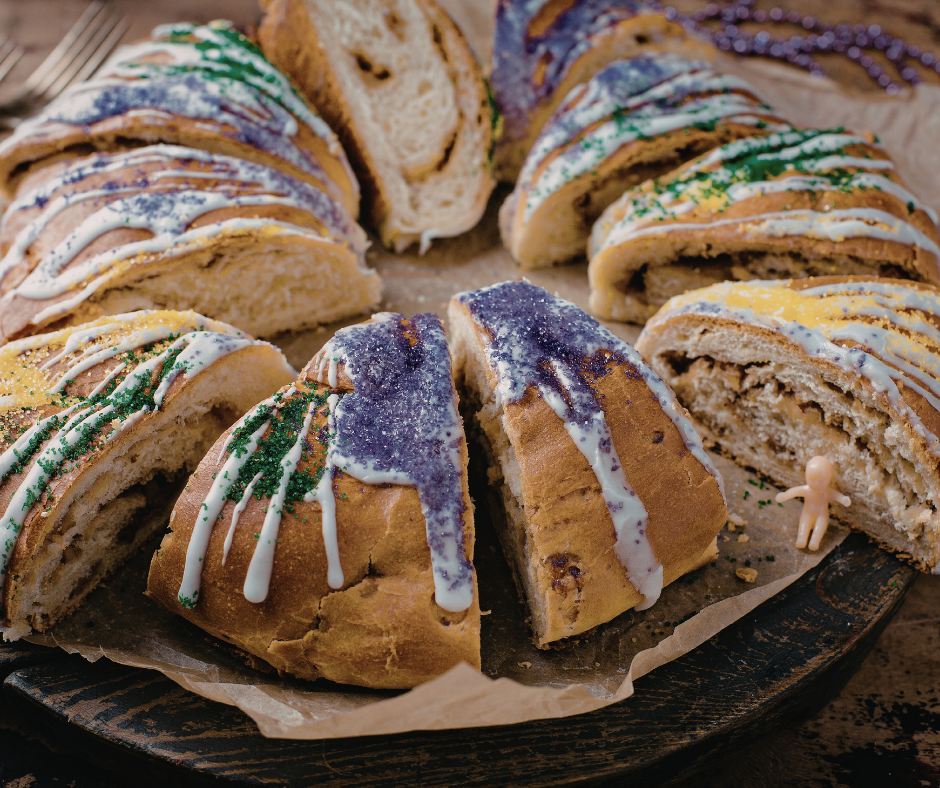
The transition into the Carnival season is marked by the arrival of the King Cake, a symbolic pastry that serves as the centerpiece of New Orleans social life for two months. To the uninitiated, it is a dessert, but to locals, the King Cake is a ritual of reciprocity. To find the “baby” hidden within the dough is not just a stroke of luck; it is a call to action, as that person is traditionally tasked with hosting the next gathering or providing the next cake. This cycle of giving ensures that the community remains connected in homes and offices throughout the season, mirroring the collaborative spirit found in the streets.
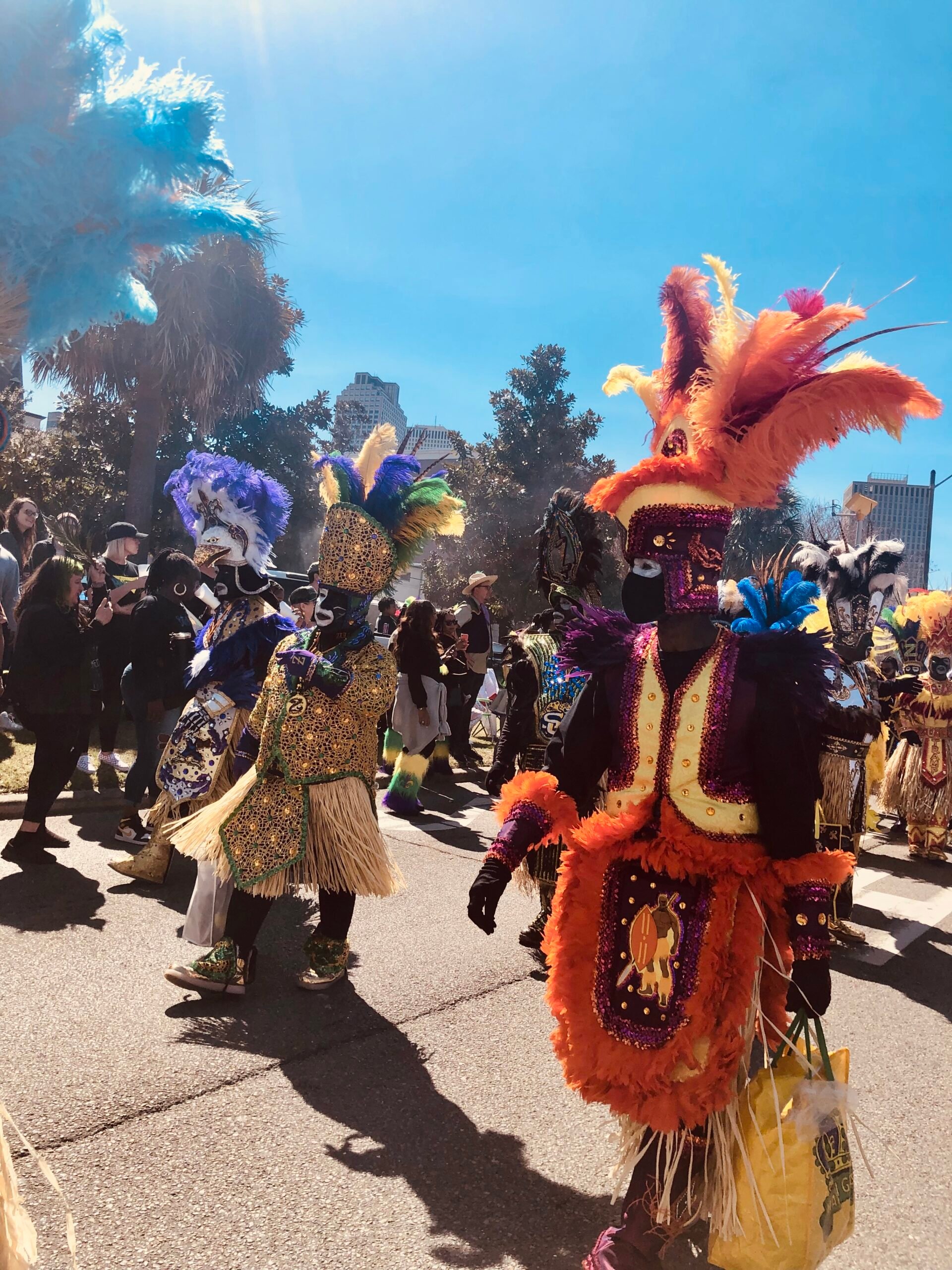
From a cultural perspective, this communal bonding is an ongoing process. Throughout the year, krewes, walking parades, school marching bands, Social Aid and Pleasure Clubs, and Black Masking Indian tribes gather to imagine, rehearse, and sew. These preparations are the true center of the experience. The grand parades on St. Charles Avenue are simply the moments when months of shared labor become visible in the public square. In this environment, involvement is the highest currency, fostering a sense of continuity across generations and neighborhoods.
The Power of Music and Brass Band Traditions
Music serves as the vital connective force that binds the New Orleans Carnival together. It moves the masses physically and emotionally, dictating how bodies gather and respond within the urban landscape. Legendary New Orleans marching bands, traditional brass bands, and the intricate call-and-response patterns of the Black Masking Indians do much more than provide a soundtrack; they regulate the pace of the city and invite spontaneous engagement.
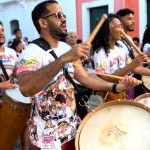
The sound of a snare drum often travels blocks ahead of a procession, acting as a sonic beacon that draws people together before the parade is even in sight. This musical approach reflects profound African diasporic traditions in which sound, motion, and social connection are inseparable. In this context, music is not a commodity to be consumed. Instead, it is an environment to be inhabited. Musicians and revelers share the same space, responding to the same rhythms, creating a natural joy born of a shared sonic environment.
Joy as a Resilient Cultural Practice
One of the most significant aspects of Mardi Gras is its inherent joy, which is a cultivated skill learned through repetition and the passing down of ancestral knowledge. It manifests in the satirical humor of hand-made costumes, the historical familiarity of parade routes, and the warmth of recognition between neighbors. This sustained happiness is built on the understanding that public celebration belongs to everyone who contributes to it.
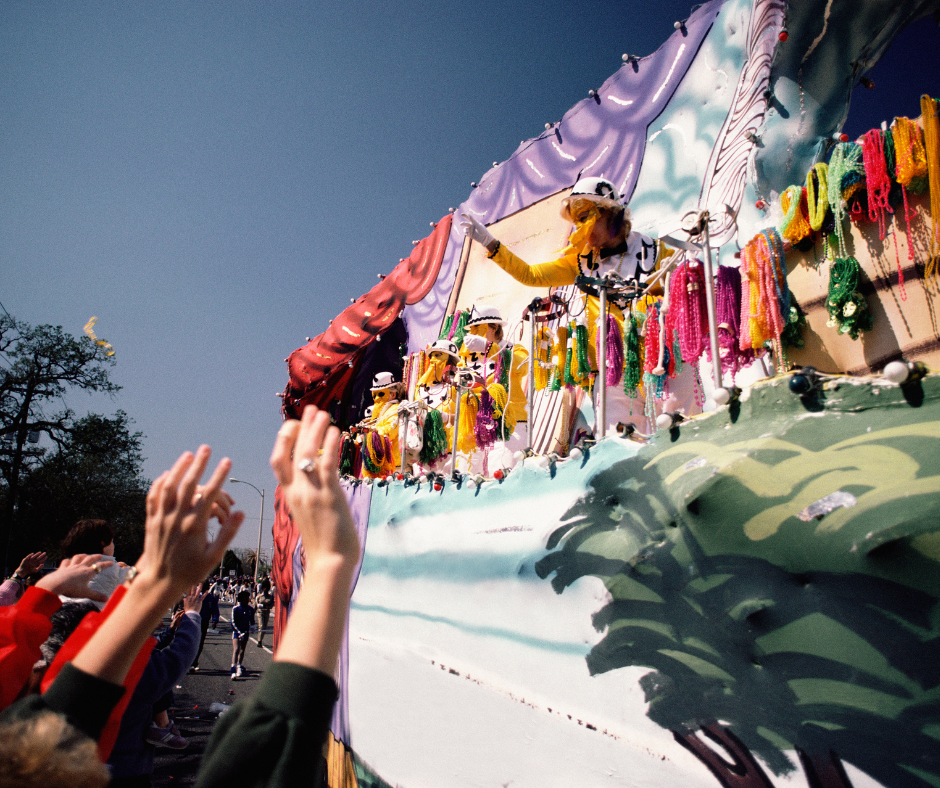
Joy becomes a form of cultural literacy, teaching the community how to exist together and move in harmony. During Carnival, the city’s streets transform into social sanctuaries shaped by rhythm rather than schedules. This transformation serves as a reminder that culture thrives when people are given the space to create together. For those who engage with the season respectfully—whether by sharing a slice of King Cake or following a neighborhood brass band—Mardi Gras offers a deeper understanding of how joy, when practiced collectively, becomes a powerful form of human connection.
Bespoke New Orleans Experiences with Musical Getaways
If you are ready to experience Mardi Gras and New Orleans with context and local access, we design fully customized itineraries shaped around your interests. Whether you want private brass band workshops, time with Social Aid and Pleasure Club members, guided explorations of historic neighborhoods, or regional extensions across South Louisiana, we build each journey with trusted cultural collaborators and musicians on the ground.
Our approach is personal and intentional. Some guests prefer an in-depth NOLA culture and music focus. Others combine New Orleans with Memphis, Muscle Shoals, and Nashville through our broader Sounds of the South tour. If you are considering a music-centered journey to Louisiana, we invite you to explore our New Orleans tours and our Sounds of the South experience to see how we can tailor the right fit for you.