
The announcement that Brazil is Travel + Leisure’s 2026 Destination of the Year is a significant moment for the global travel industry. However, for those of us who study the country’s harmonic and rhythmic structures, it feels like a long-overdue validation. Brazil is not simply a place where music is performed; it is an environment where music functions as a primary sociological and spiritual pillar.
At Musical Getaways, we view this recognition through a technical and cultural lens. Brazil’s geography is as vast as its musical catalog, ranging from the baroque colonial influences in Minas Gerais to the complex, polyrhythmic traditions of the Northeast and the avant-garde experiments in the southern metropolises.

Rio de Janeiro: Beyond the Bossa Nova
While the global imagination often rests on the 1960s Bossa Nova movement of Ipanema, the actual musical heart of Rio de Janeiro beats in the neighborhood of Lapa. Here, the preservation of Choro—the sophisticated, instrumental predecessor to Samba—is a point of high artistic pride. Venues like Carioca da Gema and the historic Clube dos Democráticos serve as laboratories for musicians who balance technical virtuosity with the malandragem (street-smart charisma) that defines the Carioca style.
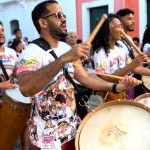
For those interested in the evolution of percussion, the North Zone’s Samba schools provide a masterclass in large-scale ensemble coordination. However, the contemporary scene is equally defined by Baile Funk and Samba-Jazz, genres that reflect the city’s complex social layers.

Salvador & Recife: The Afro-Atlantic Pulse
Salvador, Bahia, is the world’s largest African city outside of Africa, and its music is an extension of that heritage. To understand the music of Salvador is to understand the Candomblé religion, where specific drum patterns (toques) for the Orixás laid the foundation for virtually every modern Brazilian rhythm.
- The Samba-Reggae Revolution: In the 1970s and 80s, blocos-afro like Ilê Aiyê and Olodum transformed the percussive landscape, creating a sound that became a tool for political and social resistance.
- Tropicália: This 1960s movement, led by Bahian artists like Caetano Veloso and Gilberto Gil, remains one of the most intellectually significant periods in music history, blending regional folk with international rock and psychedelia.
Further north in Recife, the musicality turns toward the Manguebeat movement. Born in the 1990s as a reaction to cultural stagnation, Manguebeat fused regional Maracatu and Frevo with hip-hop and funk. The legacy of Chico Science continues to influence the city’s artists, who treat the manguezais (mangroves) as a metaphor for creative fertility. To see this in action, one must visit the legendary Sala de Reboco for authentic Forró.
São Paulo: The Industrial Vanguard
São Paulo is the fifth-largest city in the world and operates with a different tempo. Its music scene is defined by its concrete reality and its status as a melting pot for internal migration.
- The Beat Scene: São Paulo has become a global hub for sophisticated electronic music and hip-hop, often incorporating samples from 1970s Brazilian rare grooves.
- Listening Culture: The city is currently leading the “listening bar” trend. Venues like Matiz prioritize high-fidelity sound systems, allowing listeners to experience the intricate production of Brazilian masterpieces.
- The Vanguard: Artists in São Paulo continue to push the boundaries of MPB (Música Popular Brasileira). Casa de Francisca, located in a restored palace that once housed the city’s first instrument shop, remains the premier venue for this high-level curation.
Designing the Journey: Our Bespoke Approach
At Musical Getaways, we recognize that a standard itinerary cannot capture the depth of these traditions. This is why we focus exclusively on bespoke travel and tailor-made tours. We treat travel planning like a composition—it requires an understanding of structure, tension, and release.
Because we are the only travel company dedicated to music that is completely run by musicians, we bring a level of professional insight to your journey that general agencies cannot match. We don’t just find you a guide; we find you a local percussionist or a music historian who can explain the 2/4 time signature of a Frevo or the social history of a specific Samba de Roda.
Our customized travel experiences ensure that you are in the right room at the right time. Whether that means securing a private workshop with a luthier, finding a front-row seat at an intimate Choro session, or arranging a luxury stay at the Rosewood São Paulo, our focus is on the objective quality and musical integrity of the experience.
As Brazil takes its place as the 2026 Destination of the Year, the demand for authentic access will be high. Our focus on tailored travel allows us to bypass the predictable and focus on the profound. We invite you to explore Brazil not as a spectator, but as a student of its infinite songbook.